Original: $20,684.00
-70%$20,684.00
$6,205.20The Story
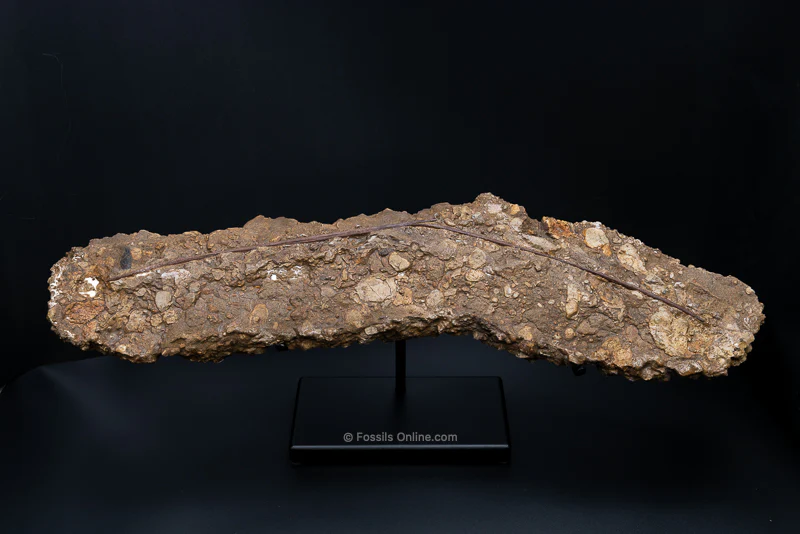
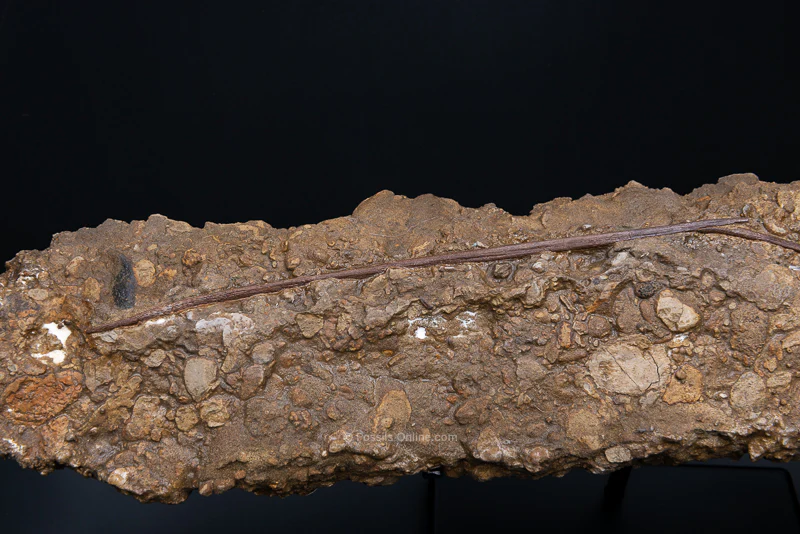
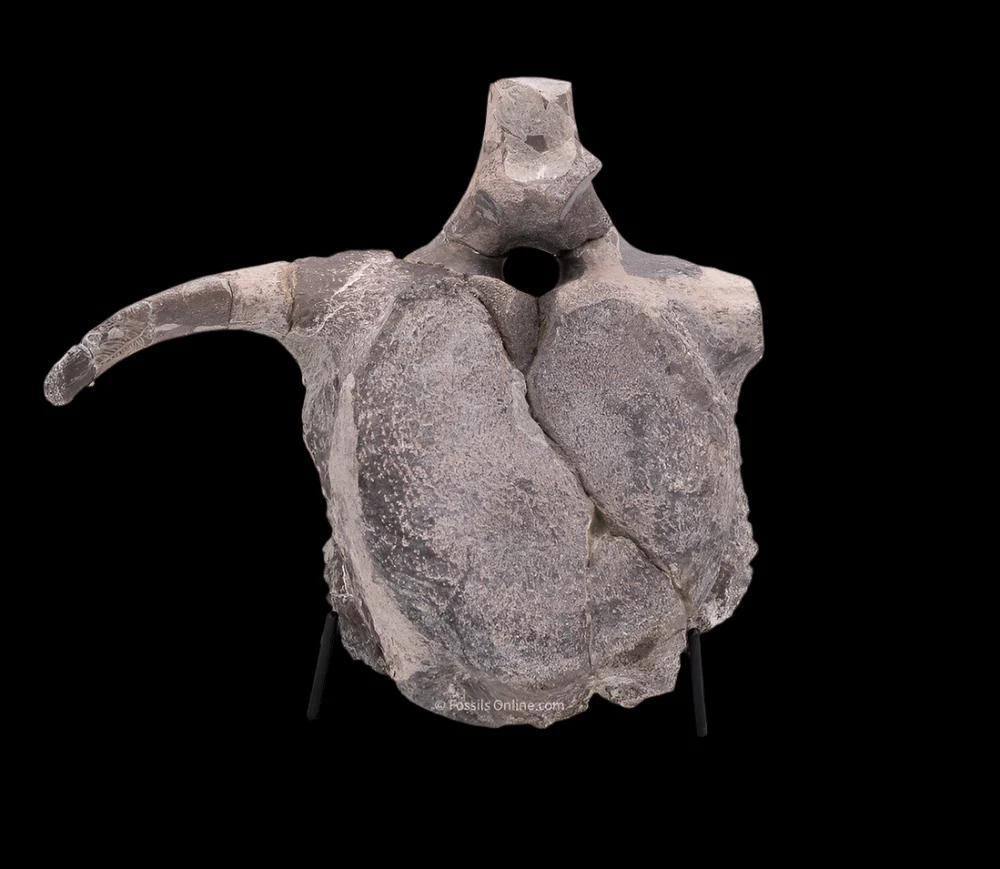
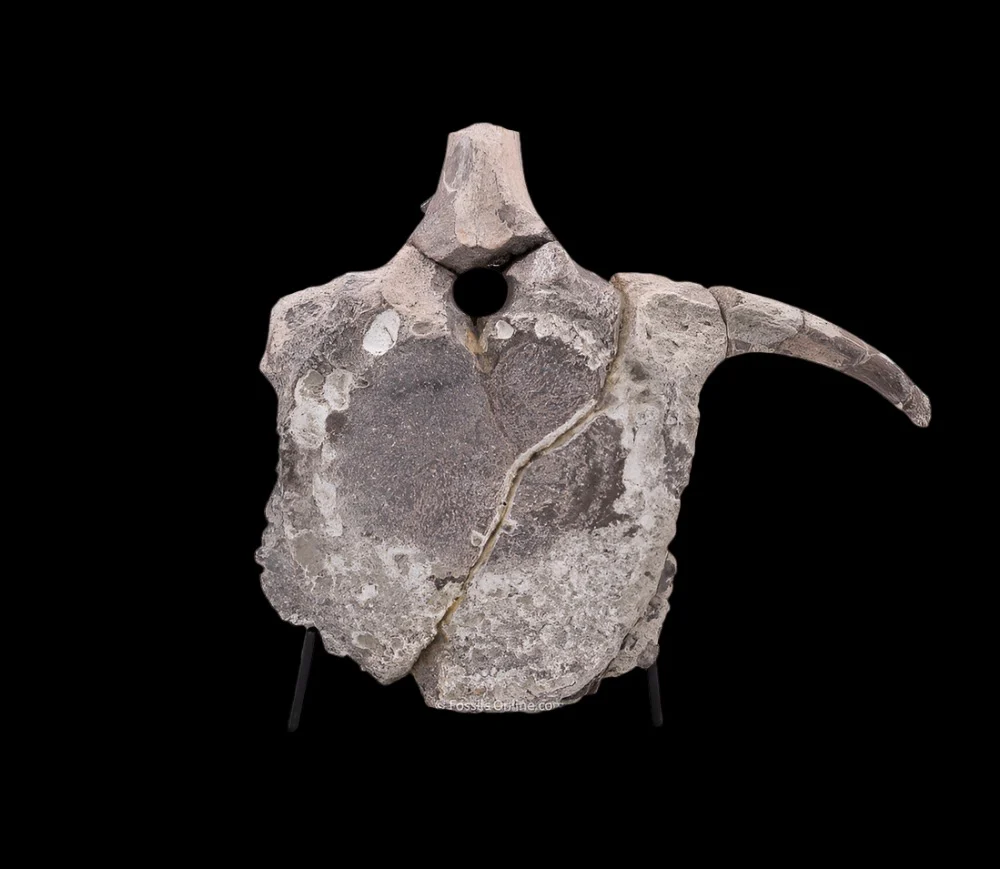
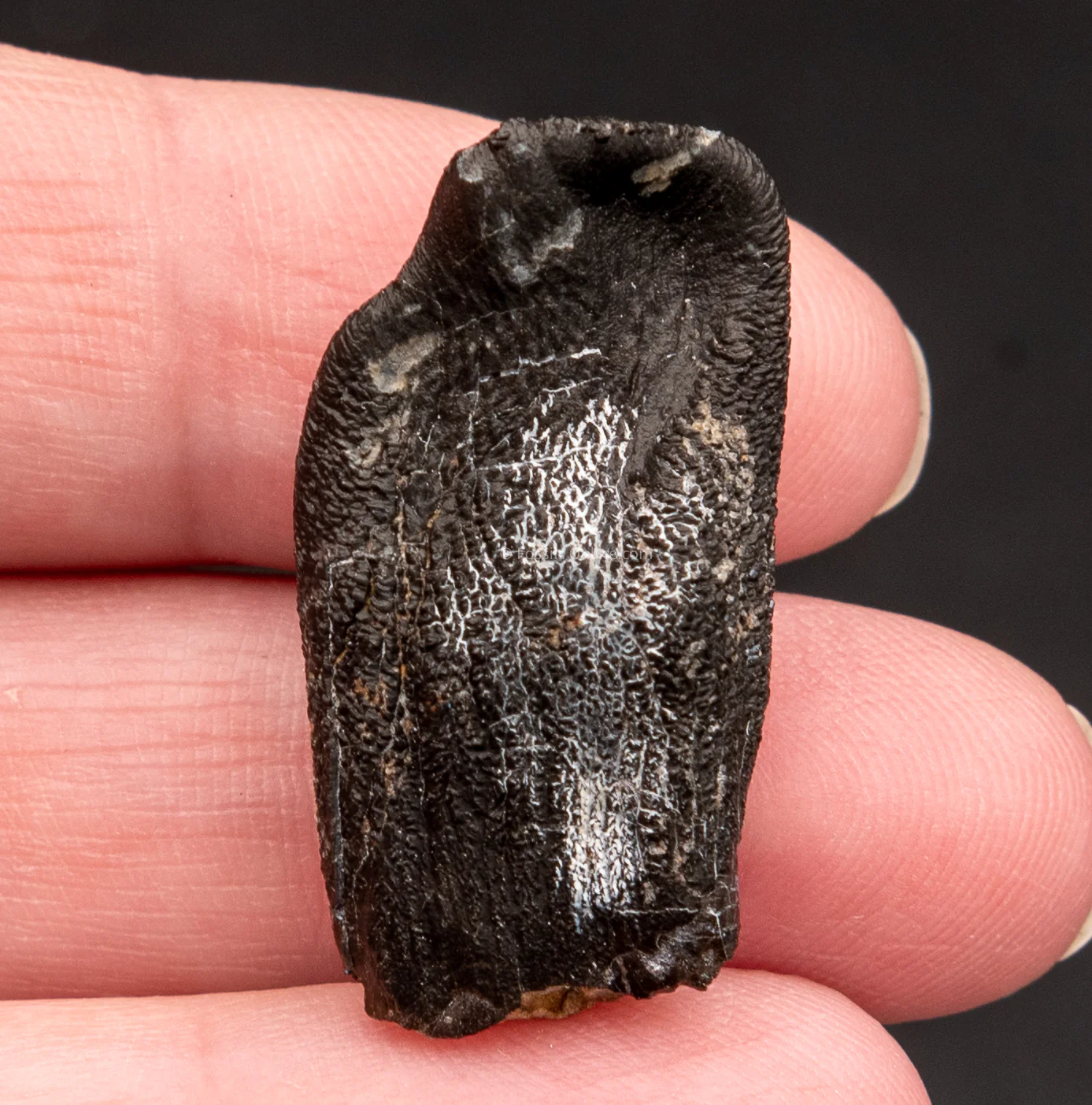
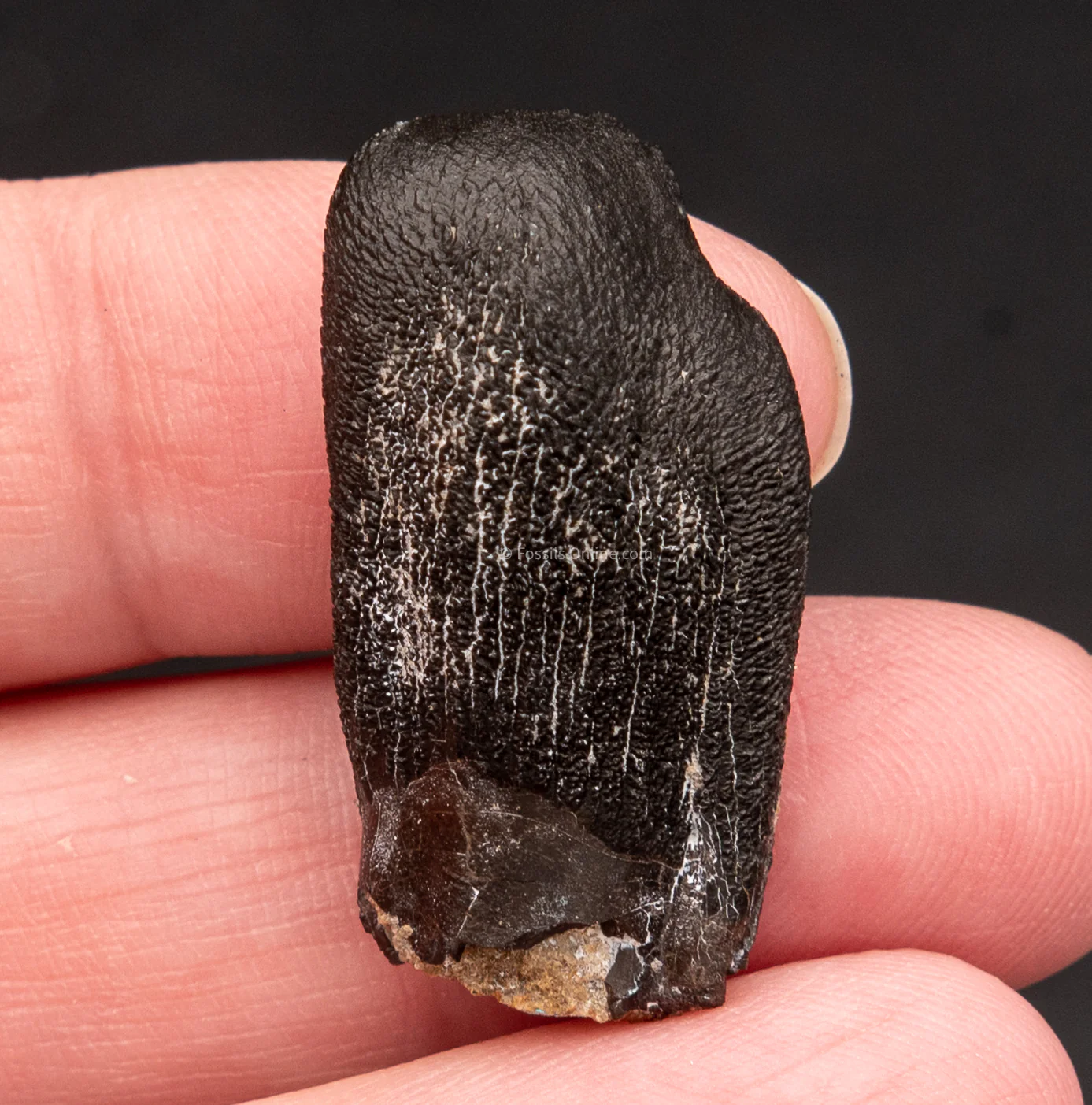
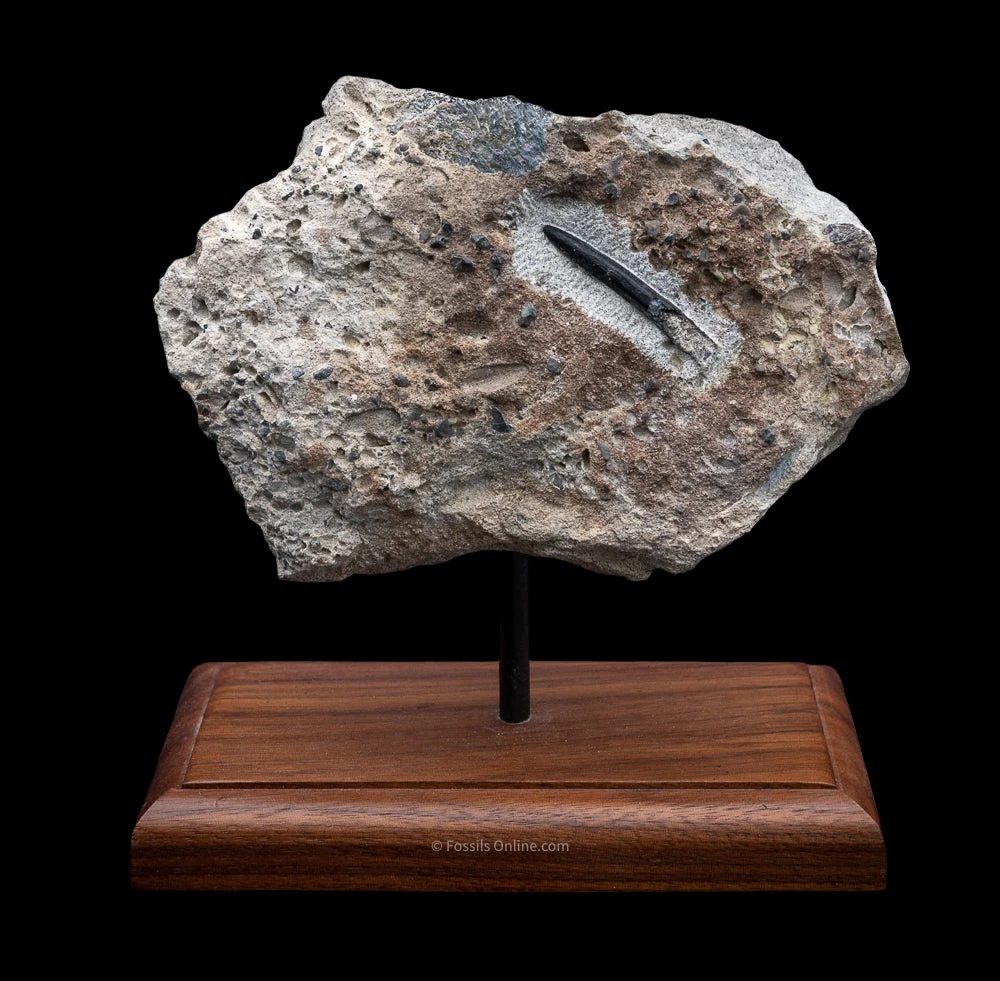
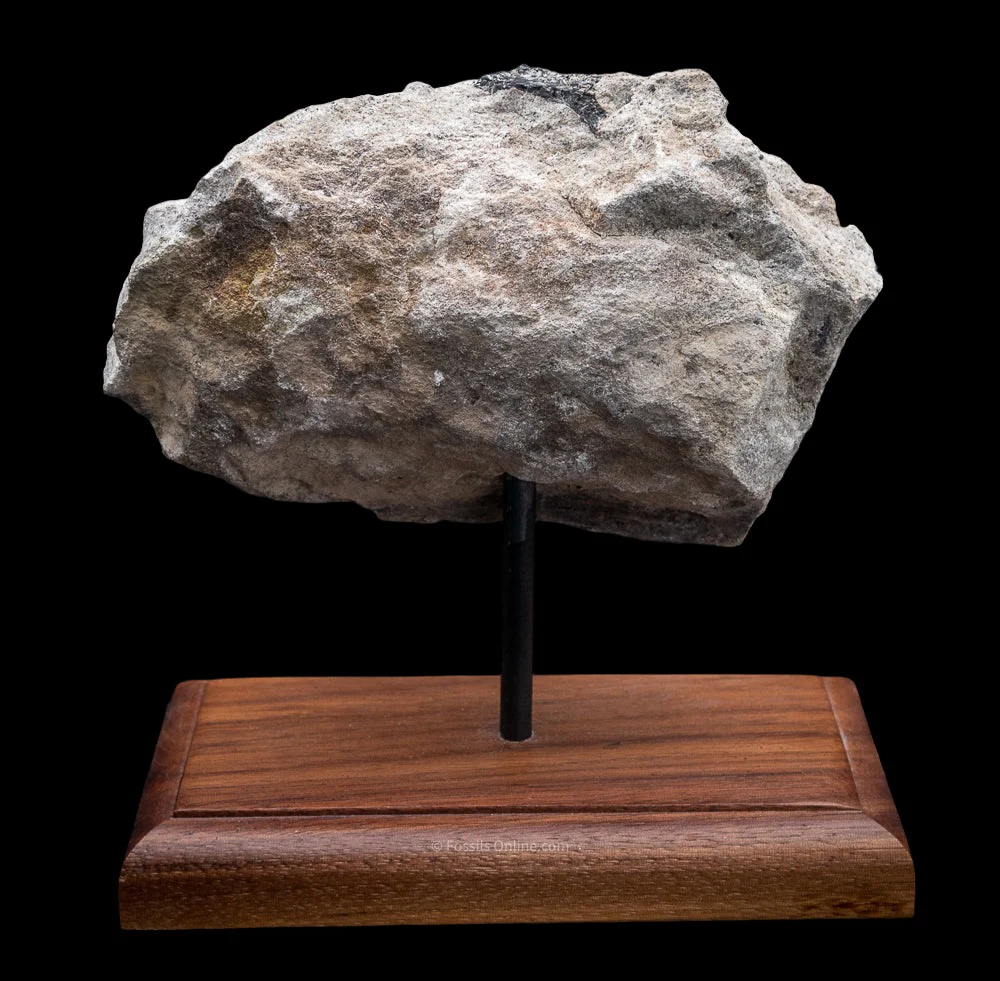
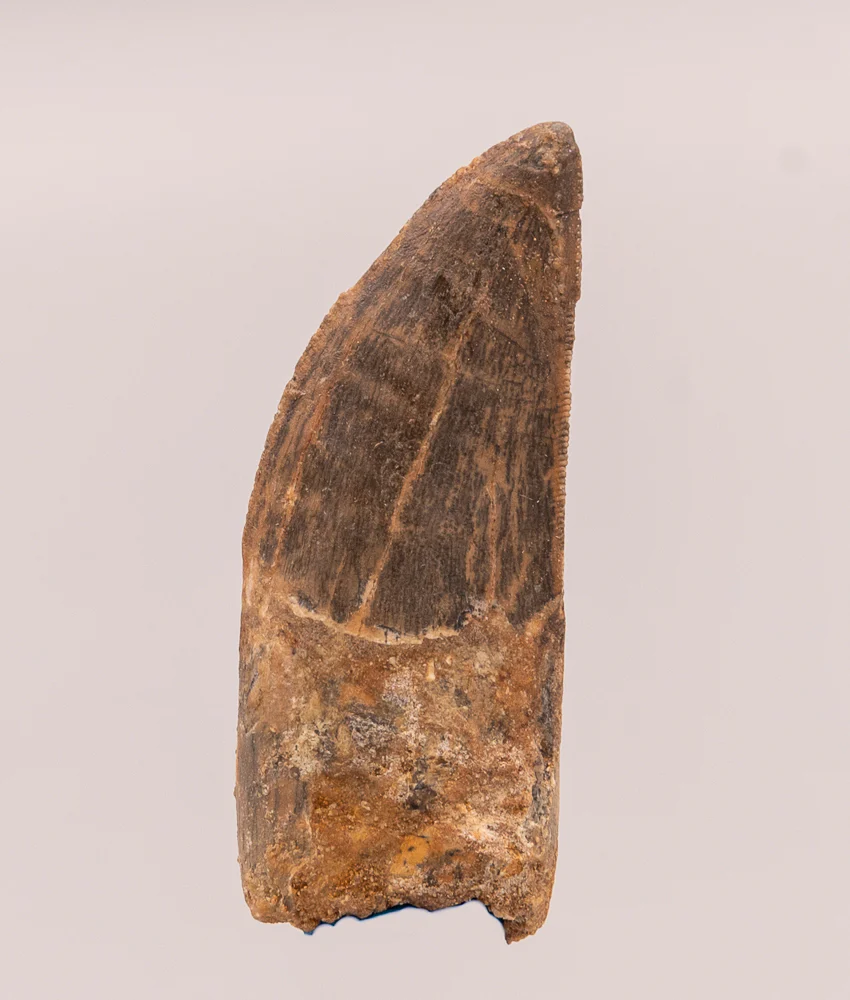
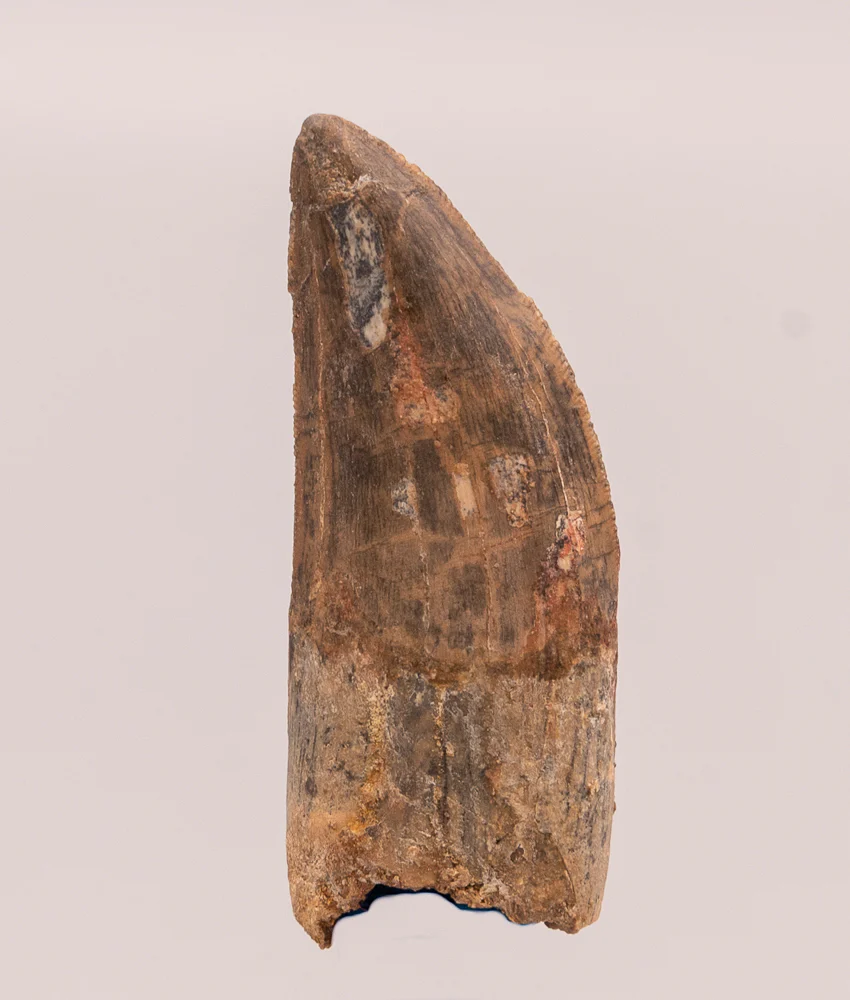
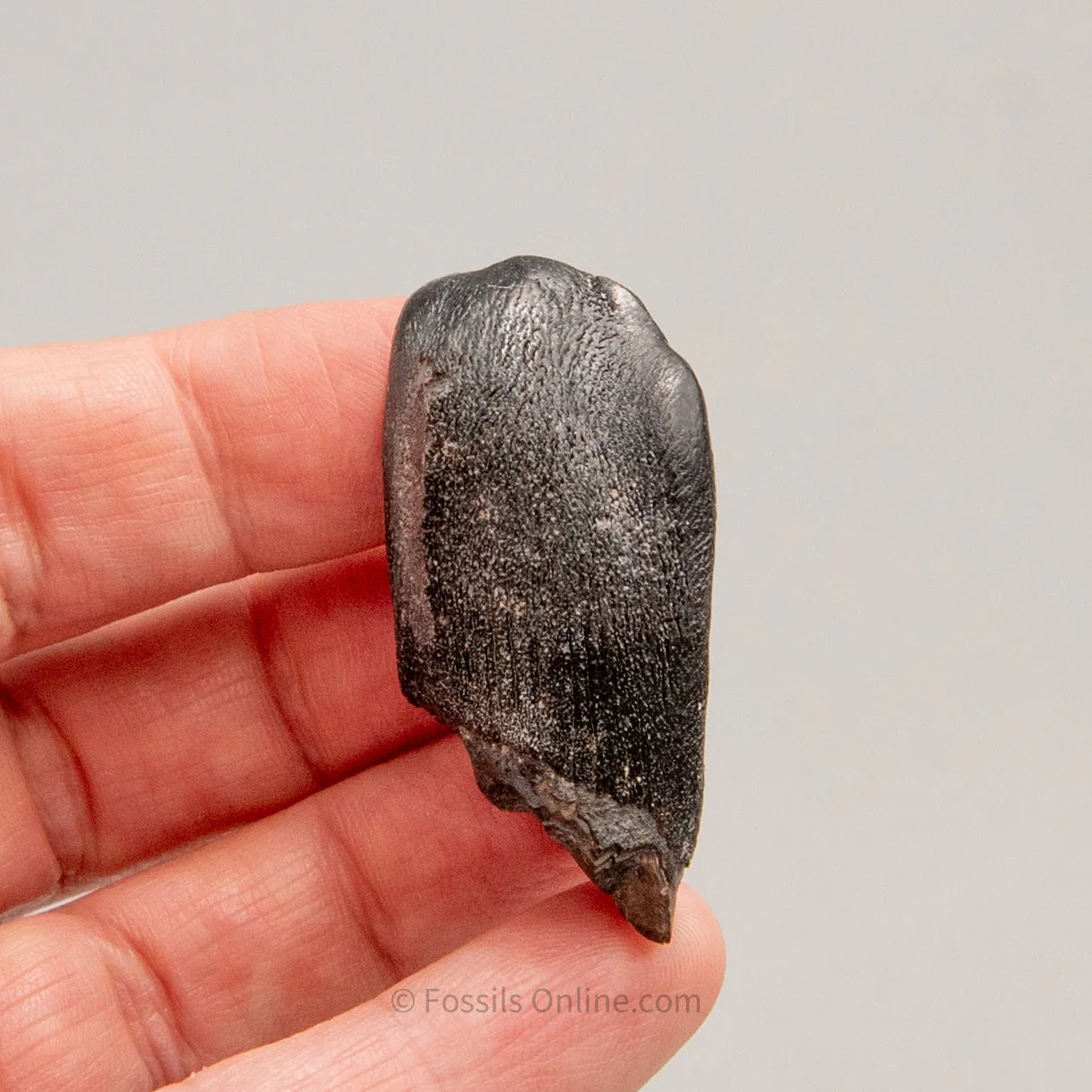
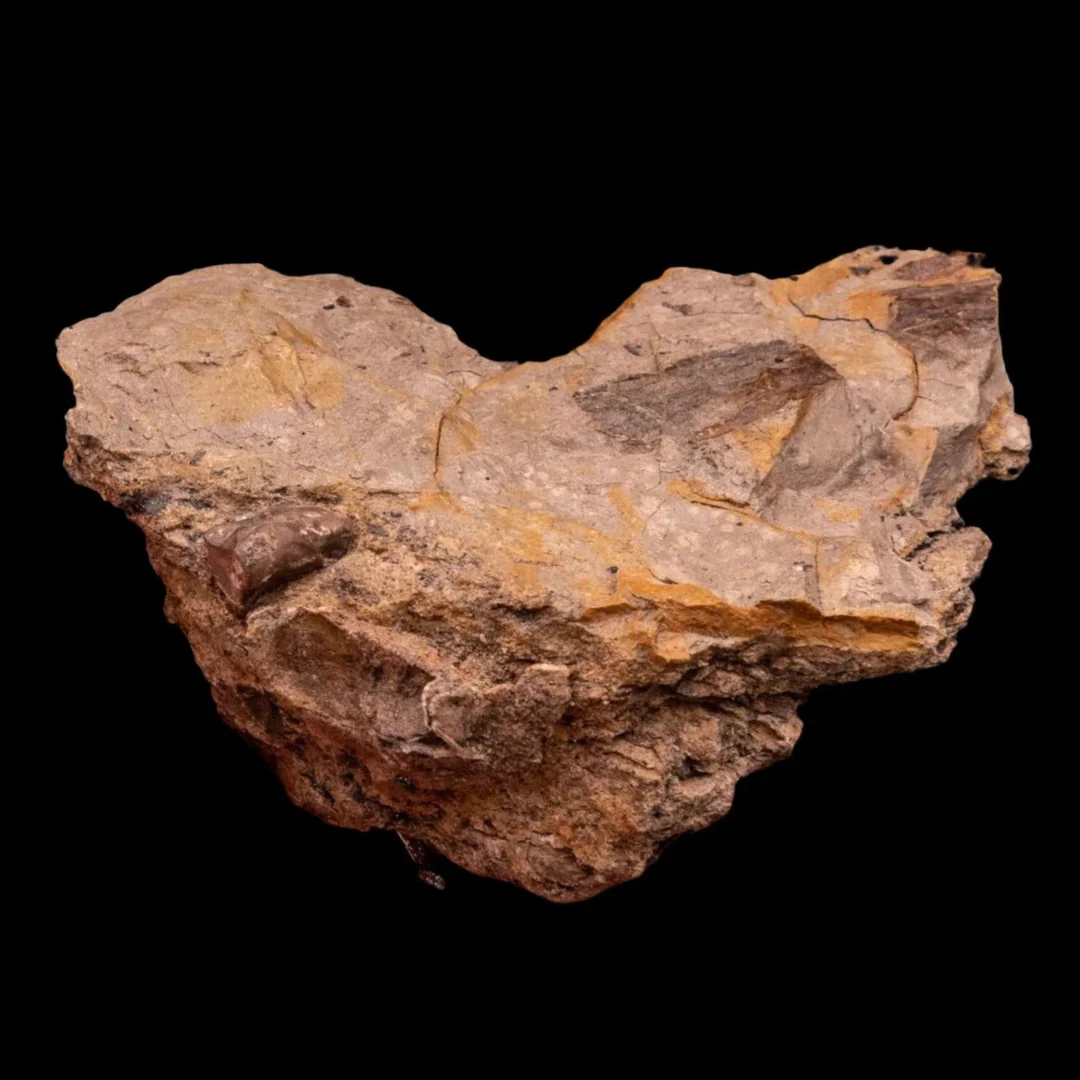
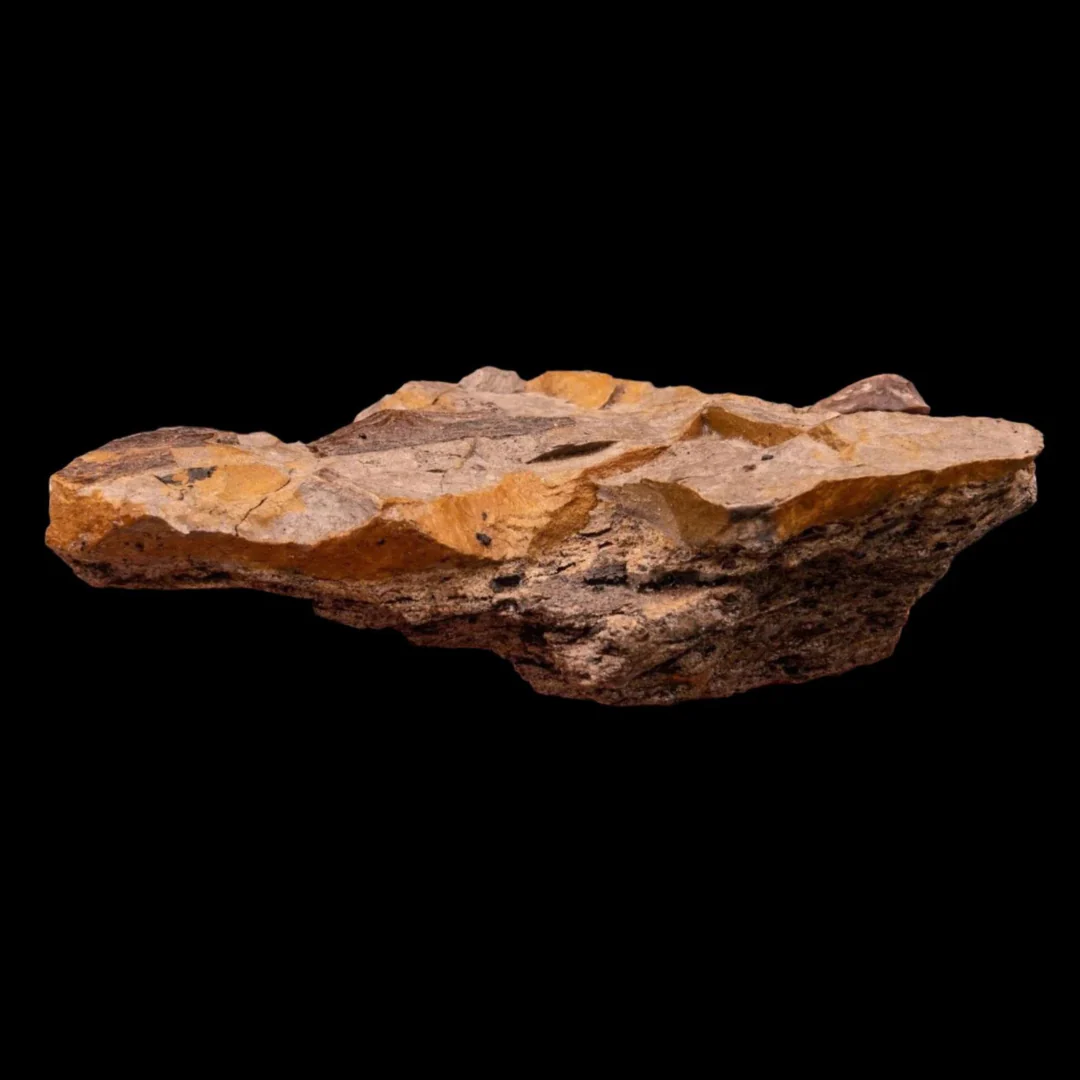
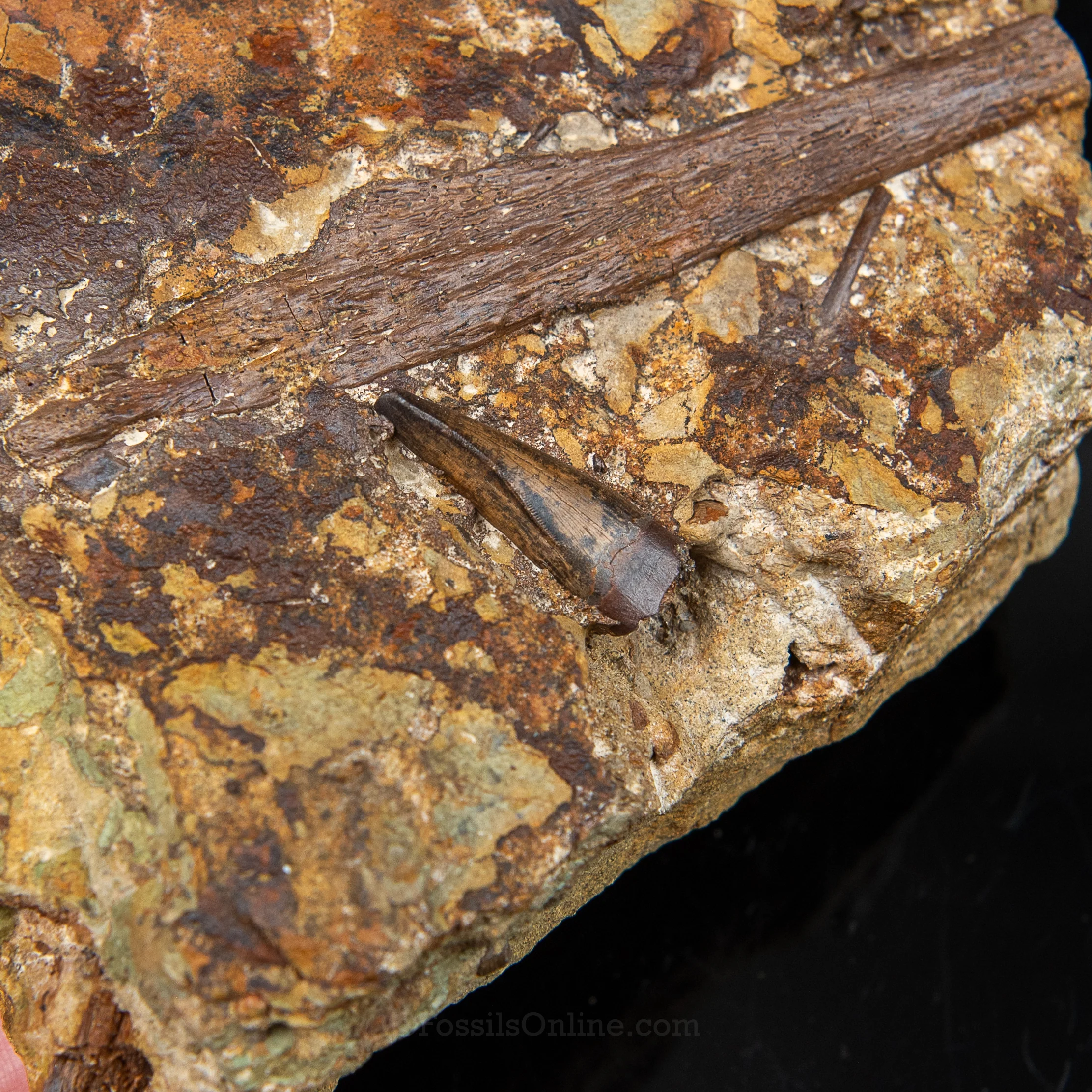
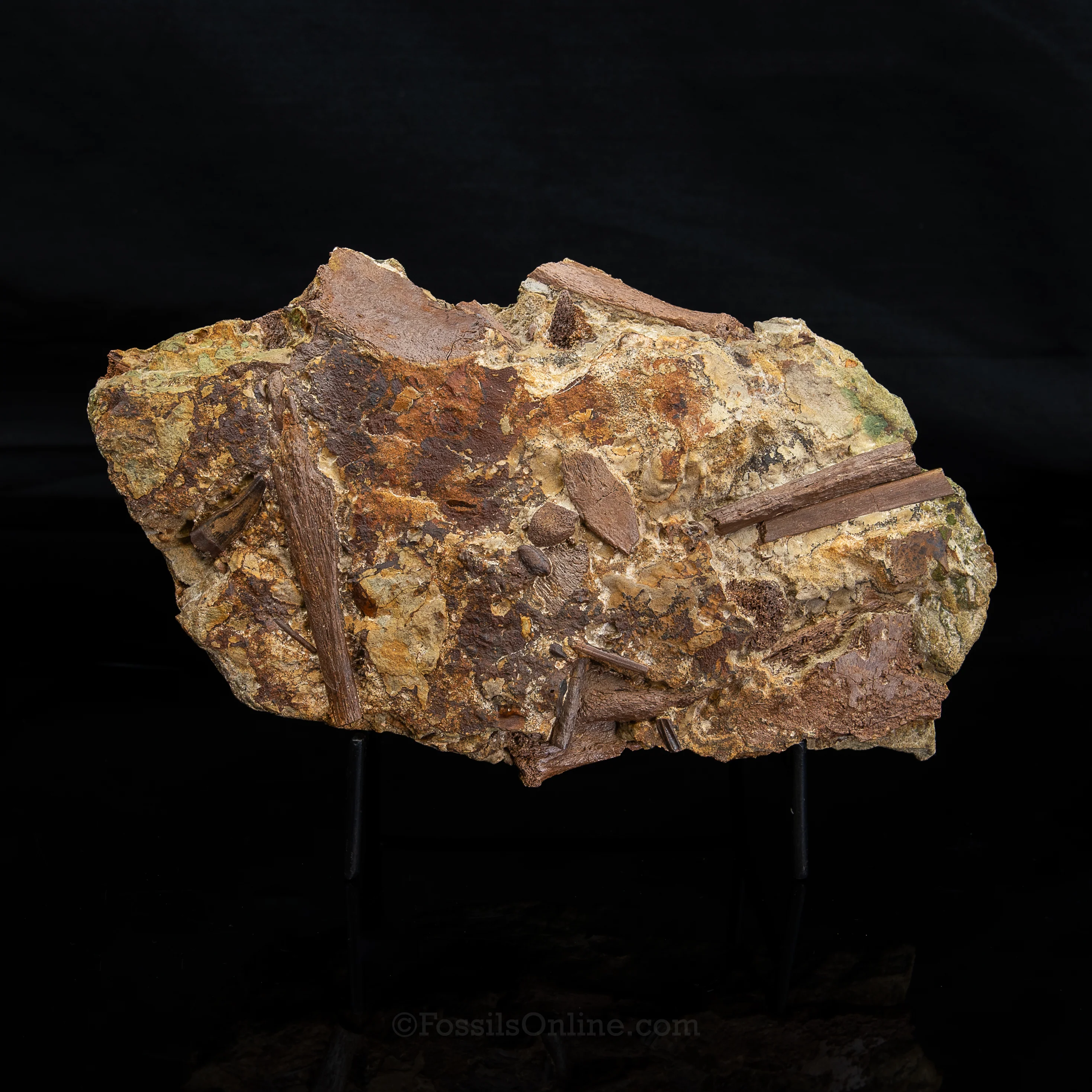
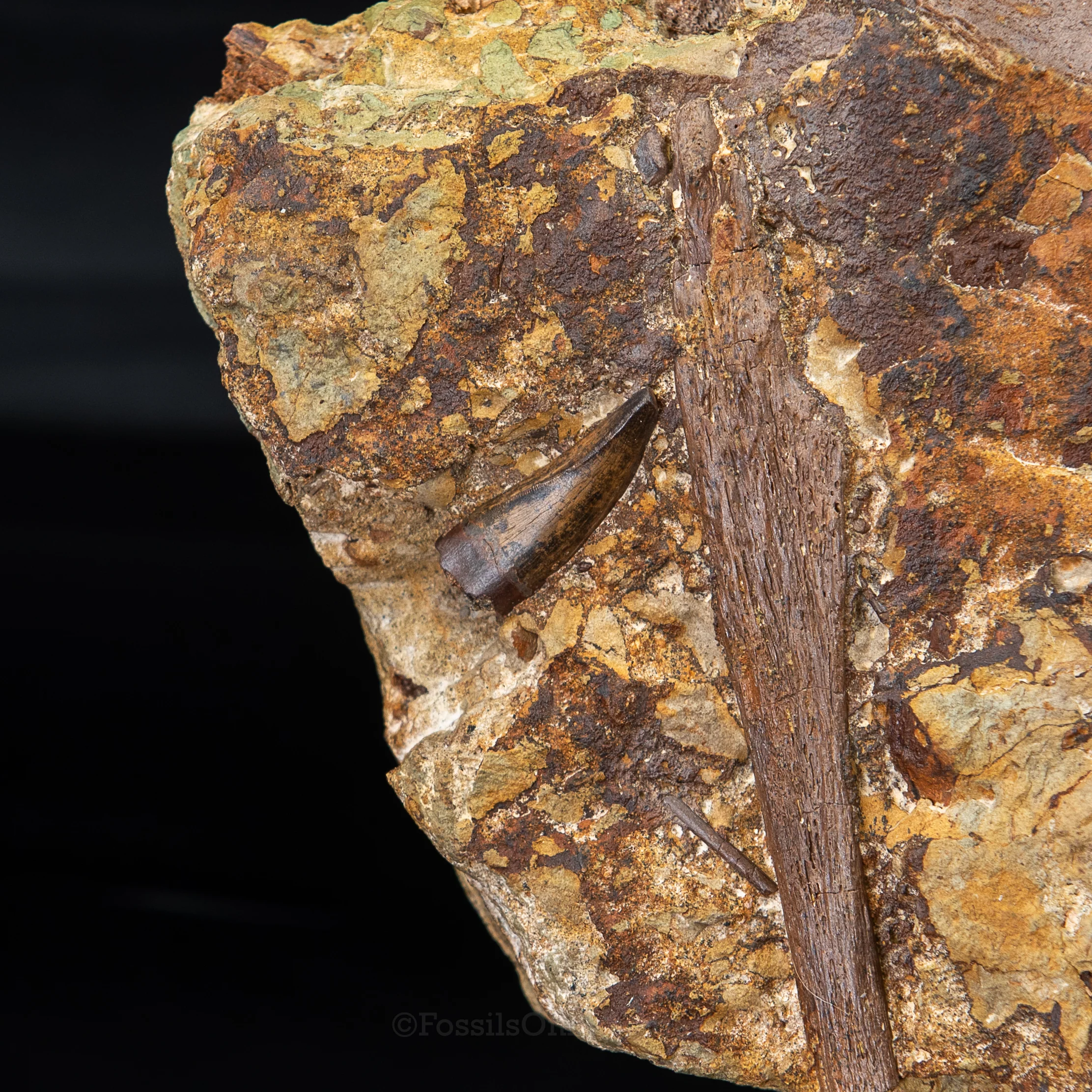
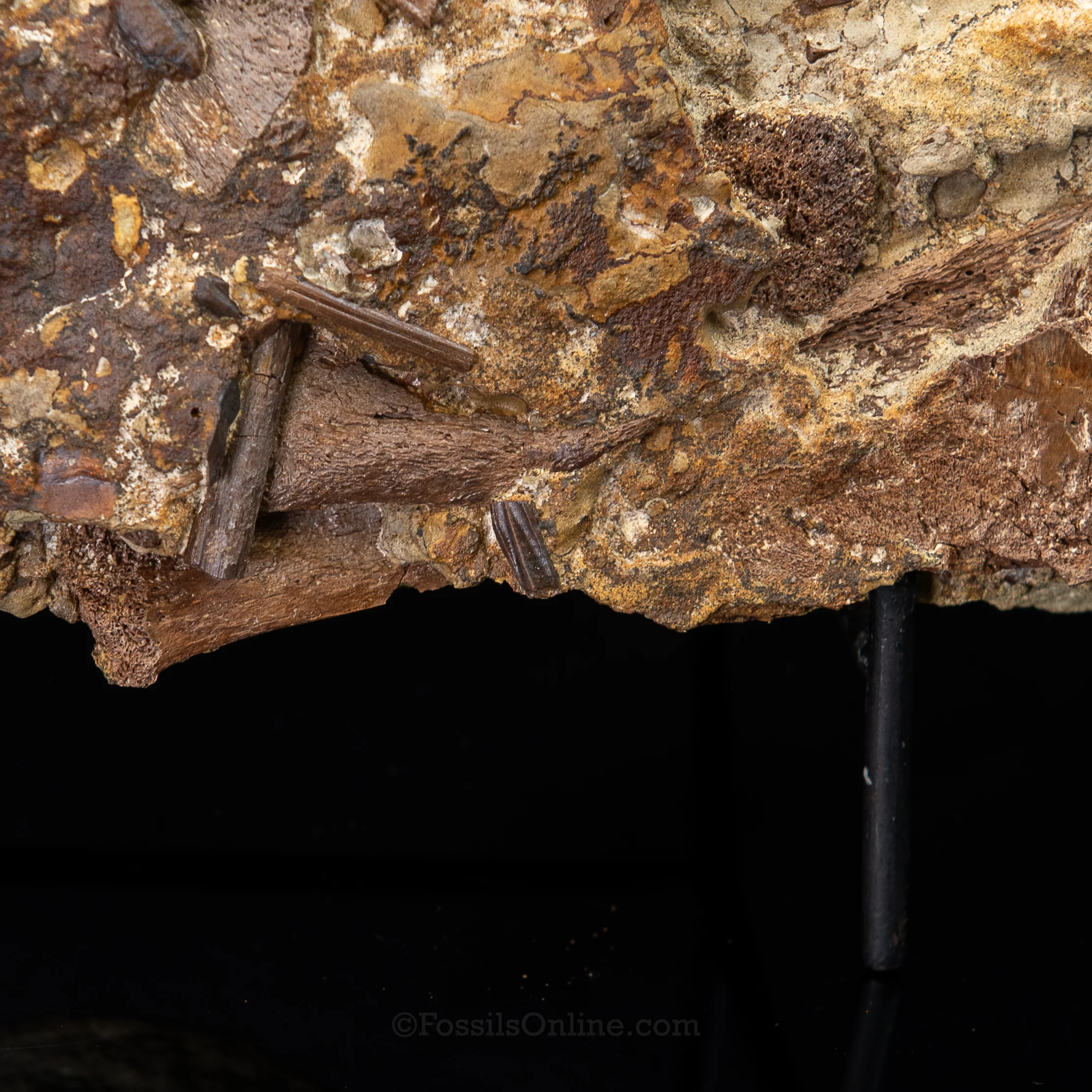
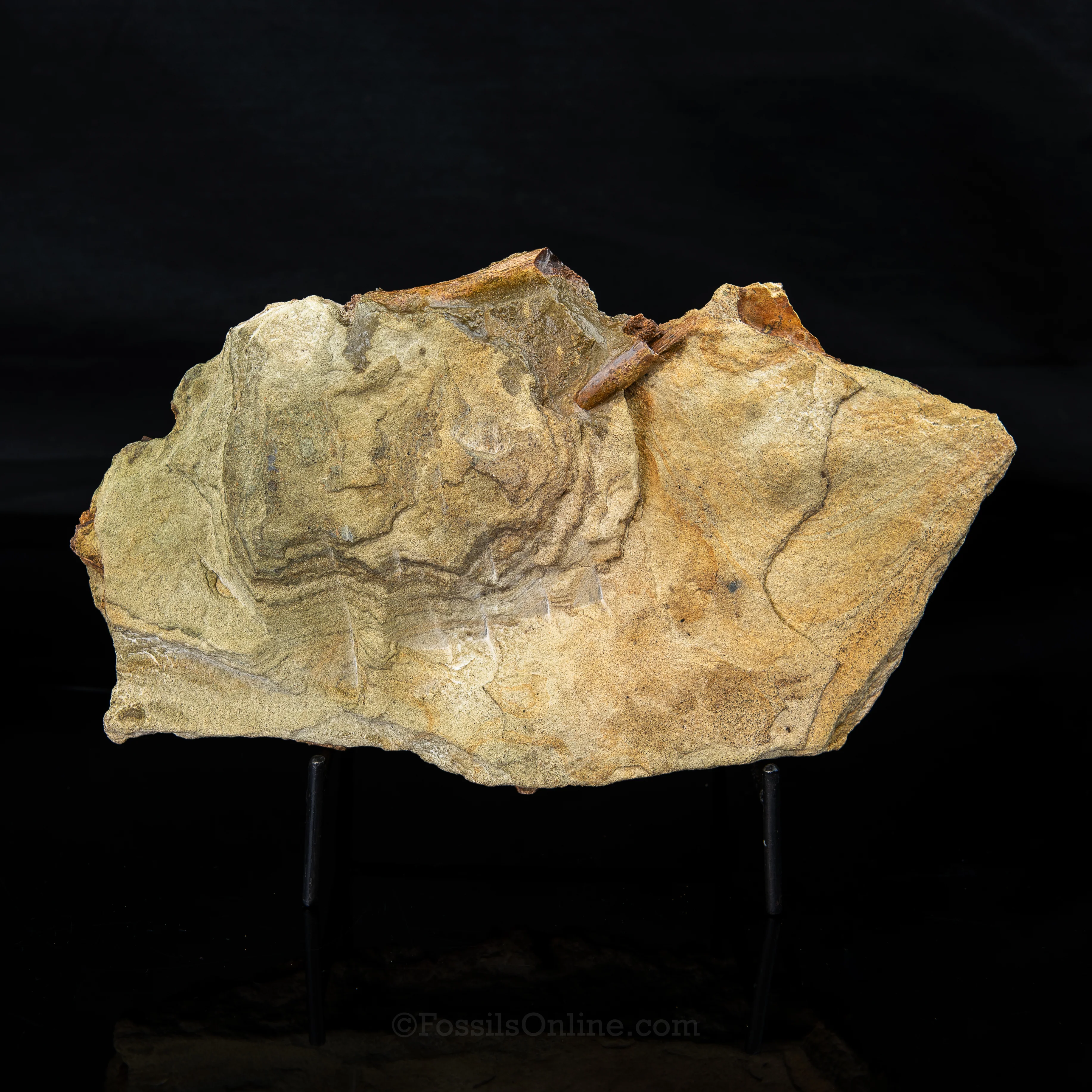
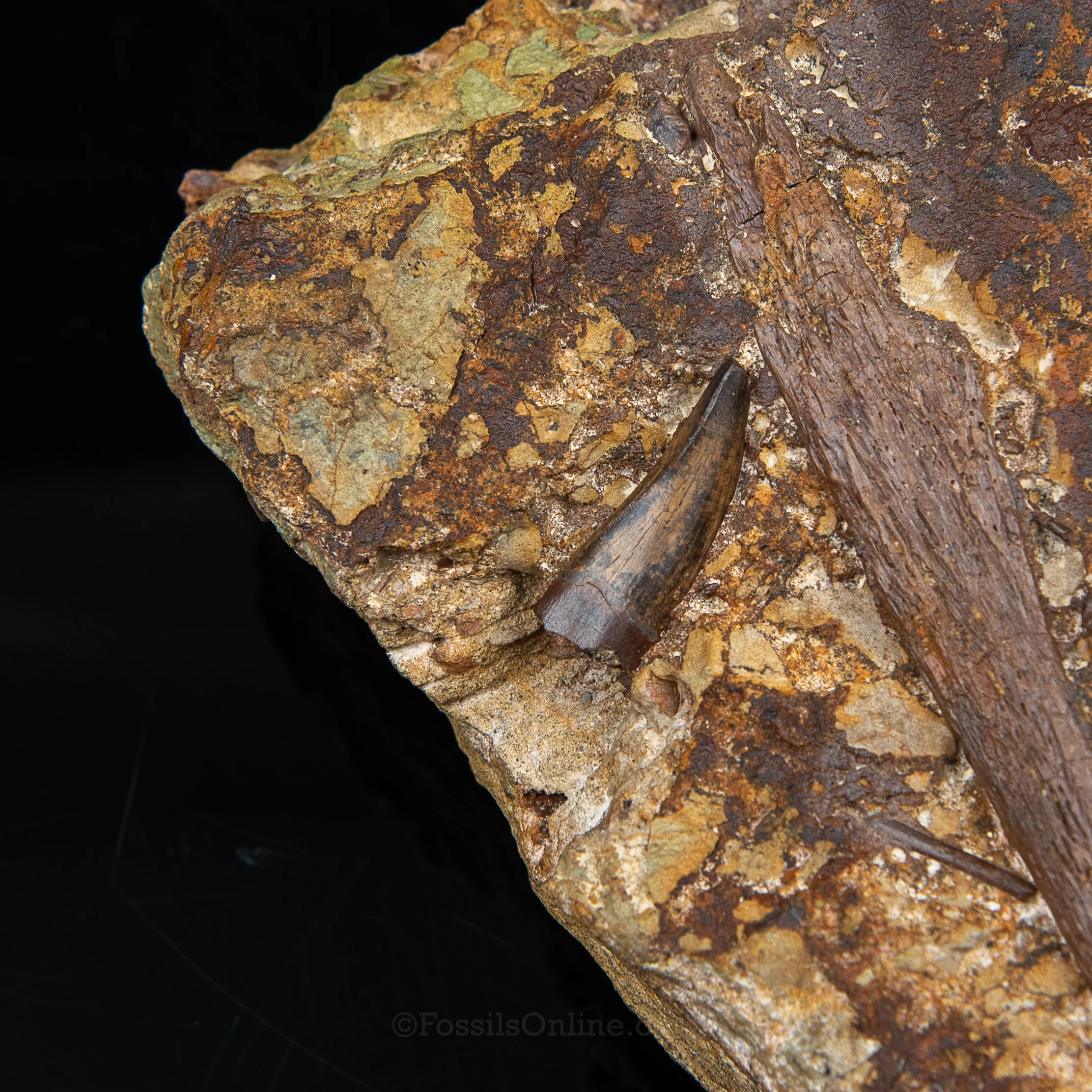
At 10.5 inches wide, this sandstone specimen is highlighted by a beautifully preserved Tyrannosaurus rex premaxillary tooth (1.12") embedded in the matrix. Surrounding it are additional remains, including Edmontosaurus teeth, ossified tendons, and bones most likely from Edmontosaurus, all left undisturbed in their original position. Unearthed from the Lance Formation in Wyoming, this remarkable piece captures a vivid snapshot of Late Cretaceous life, frozen in stone for over 66 million years.
The Lance Formation in Wyoming, a geological formation from the Late Cretaceous period, is known for its rich fossil content, including the remains of hadrosaurs, a group of duck-billed dinosaurs. Among the most intriguing discoveries from this region are the fossilized tendons of these hadrosaurs, which offer unique insights into the anatomy and physiology of these prehistoric creatures.
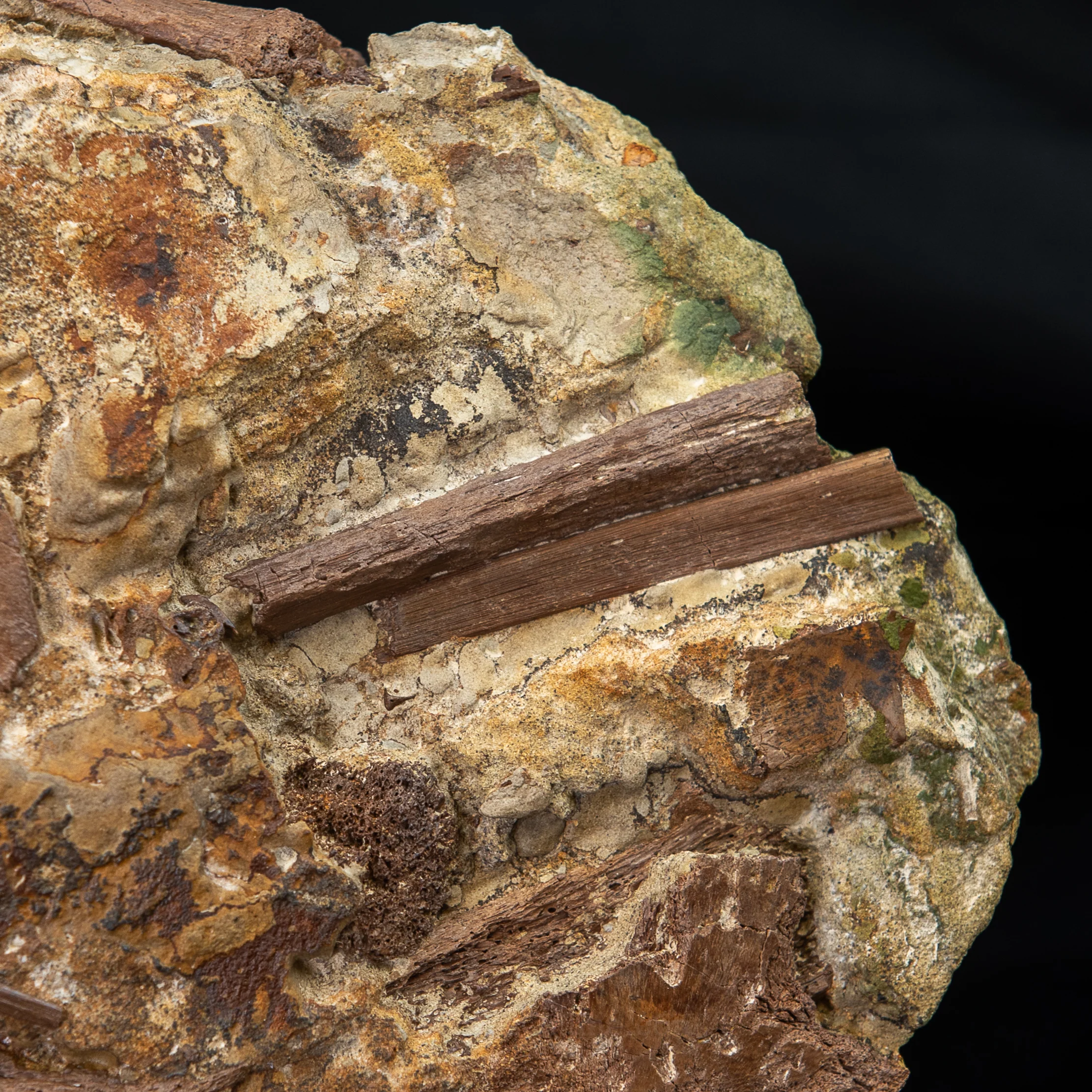
Characteristics of Fossilized Tendons: Fossilized tendons in hadrosaurs are primarily ossified tendons, which means they have undergone a process of mineralization, turning them into stone. These tendons are typically found along the spine and tail of the dinosaur. In life, these tendons would have provided support and stability to the animal's body, especially important for large, bipedal or quadrupedal creatures like hadrosaurs.
Details & Craftsmanship
Every detail has been carefully considered to bring you the perfect product.
Details & Craftsmanship
Every detail has been carefully considered to bring you the perfect product.
Details & Craftsmanship
Every detail has been carefully considered to bring you the perfect product.
Details & Craftsmanship
Every detail has been carefully considered to bring you the perfect product.
Details & Craftsmanship
Every detail has been carefully considered to bring you the perfect product.
Details & Craftsmanship
Every detail has been carefully considered to bring you the perfect product.
Description
At 10.5 inches wide, this sandstone specimen is highlighted by a beautifully preserved Tyrannosaurus rex premaxillary tooth (1.12") embedded in the matrix. Surrounding it are additional remains, including Edmontosaurus teeth, ossified tendons, and bones most likely from Edmontosaurus, all left undisturbed in their original position. Unearthed from the Lance Formation in Wyoming, this remarkable piece captures a vivid snapshot of Late Cretaceous life, frozen in stone for over 66 million years.
The Lance Formation in Wyoming, a geological formation from the Late Cretaceous period, is known for its rich fossil content, including the remains of hadrosaurs, a group of duck-billed dinosaurs. Among the most intriguing discoveries from this region are the fossilized tendons of these hadrosaurs, which offer unique insights into the anatomy and physiology of these prehistoric creatures.
Characteristics of Fossilized Tendons: Fossilized tendons in hadrosaurs are primarily ossified tendons, which means they have undergone a process of mineralization, turning them into stone. These tendons are typically found along the spine and tail of the dinosaur. In life, these tendons would have provided support and stability to the animal's body, especially important for large, bipedal or quadrupedal creatures like hadrosaurs.