Original: $2,777.00
-70%$2,777.00
$833.10The Story
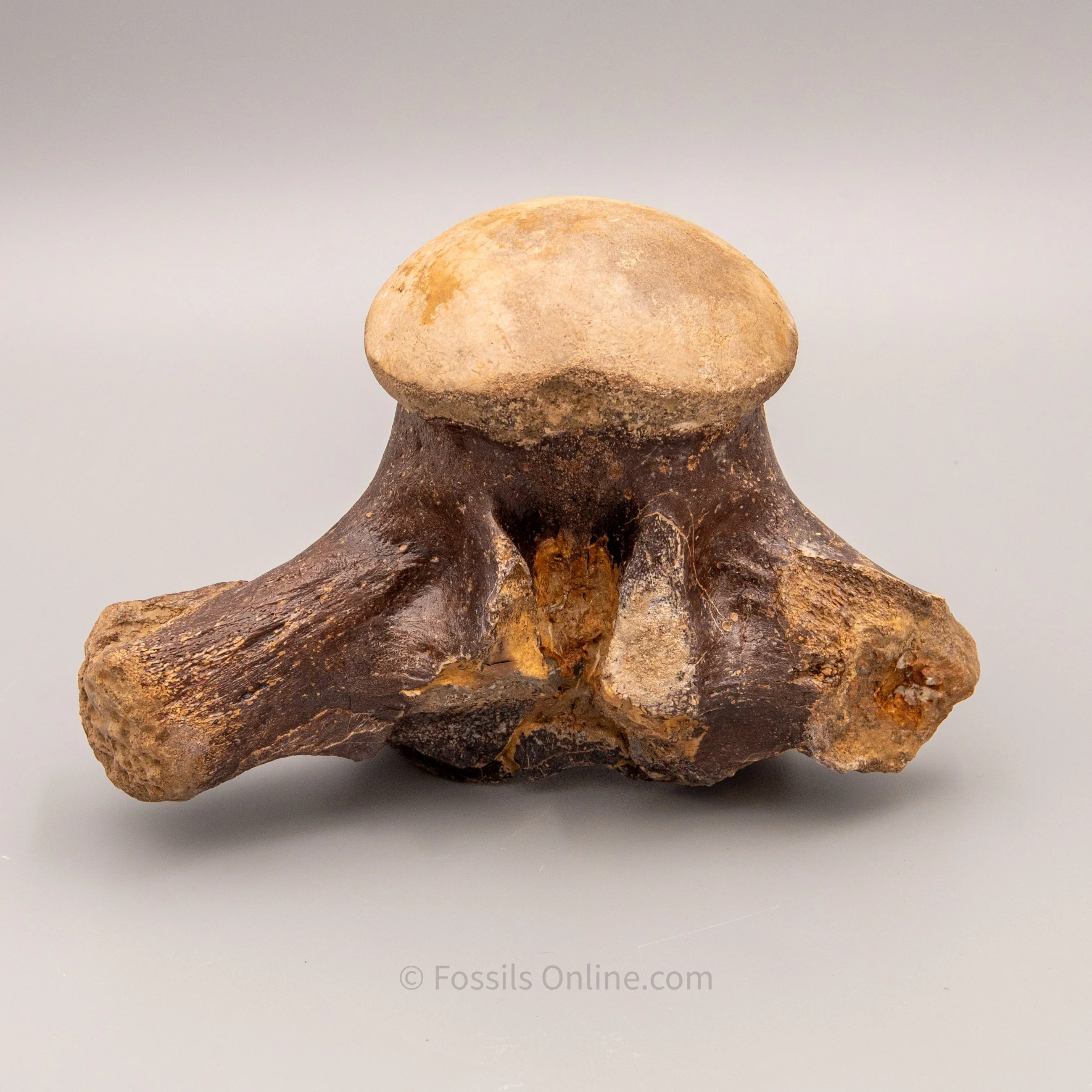
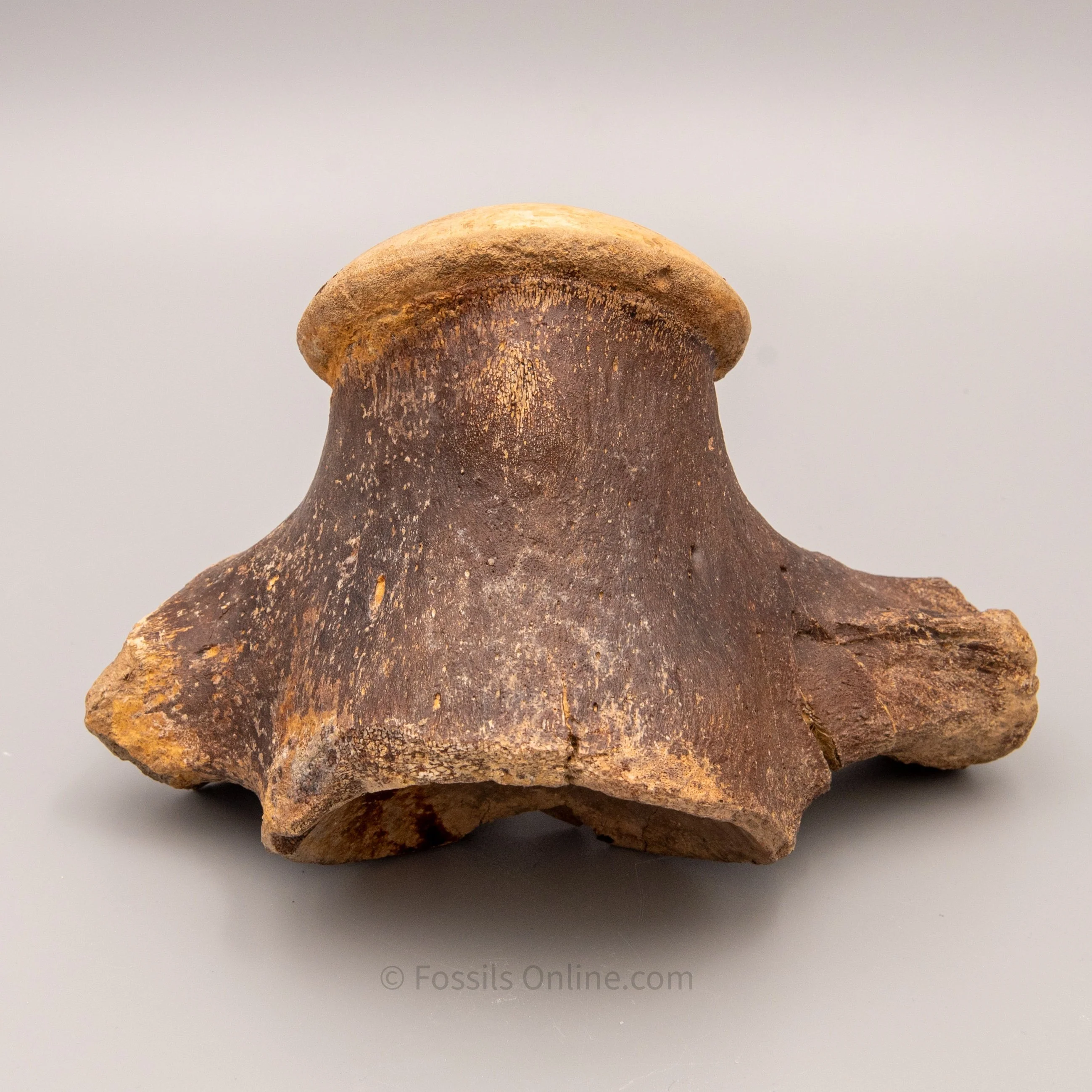
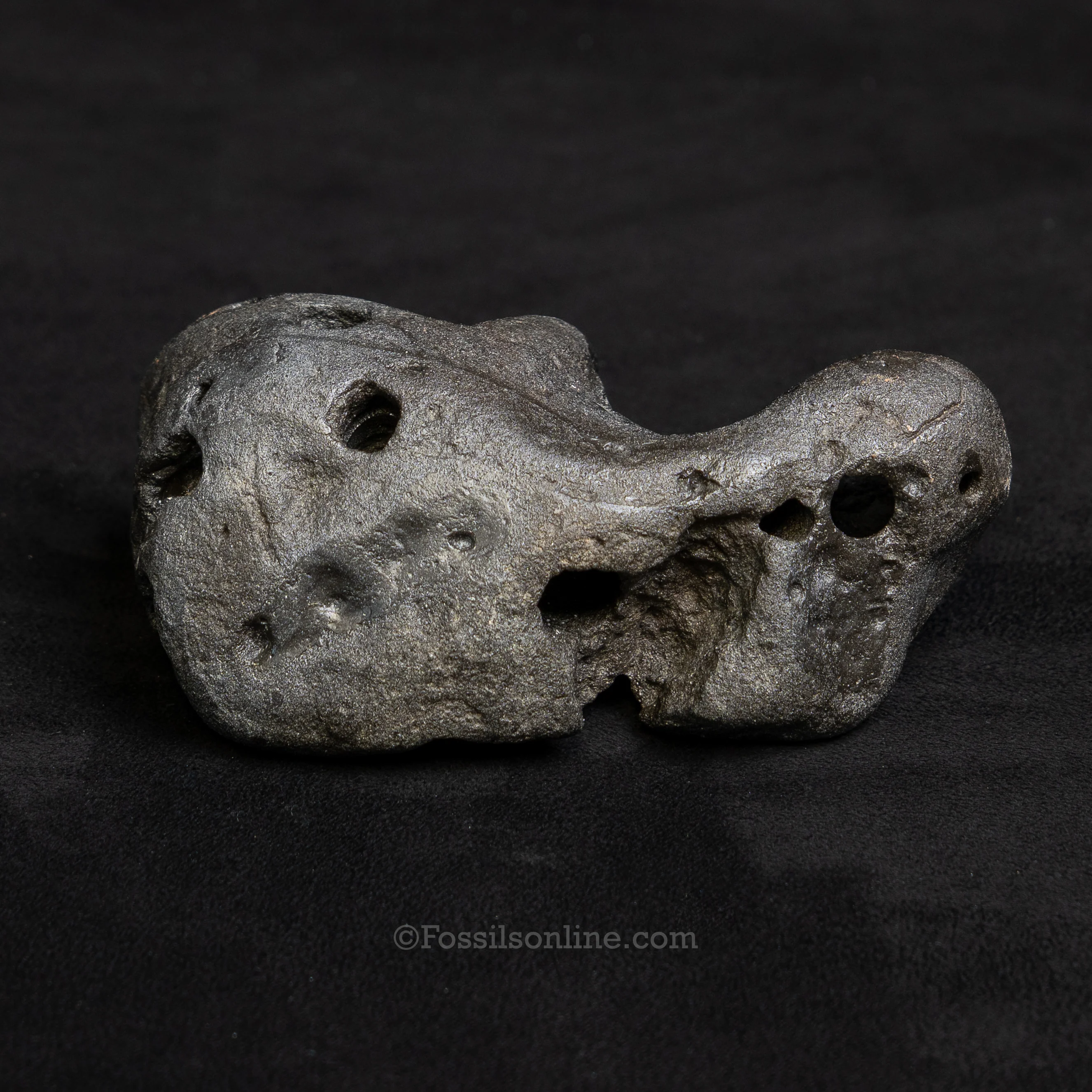
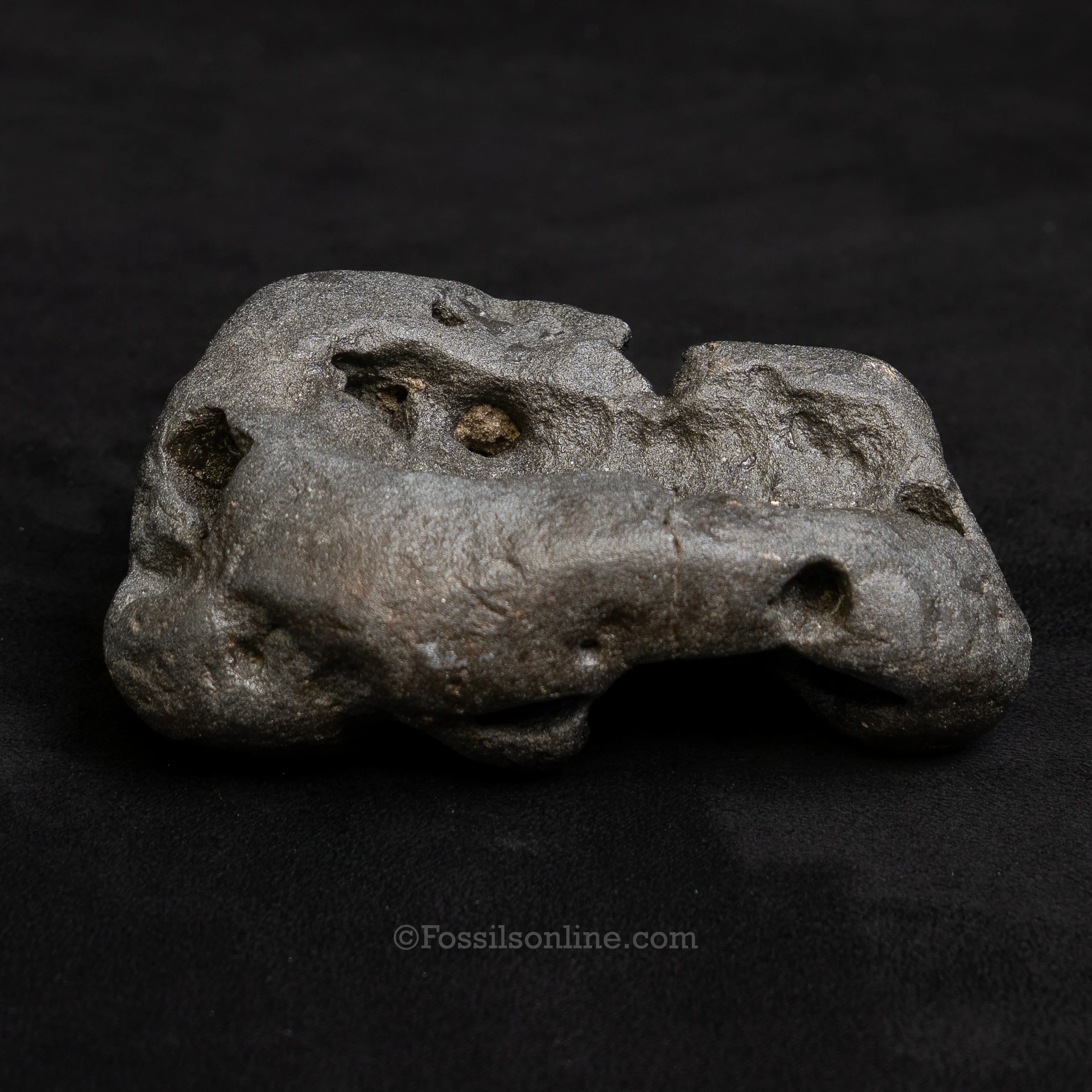
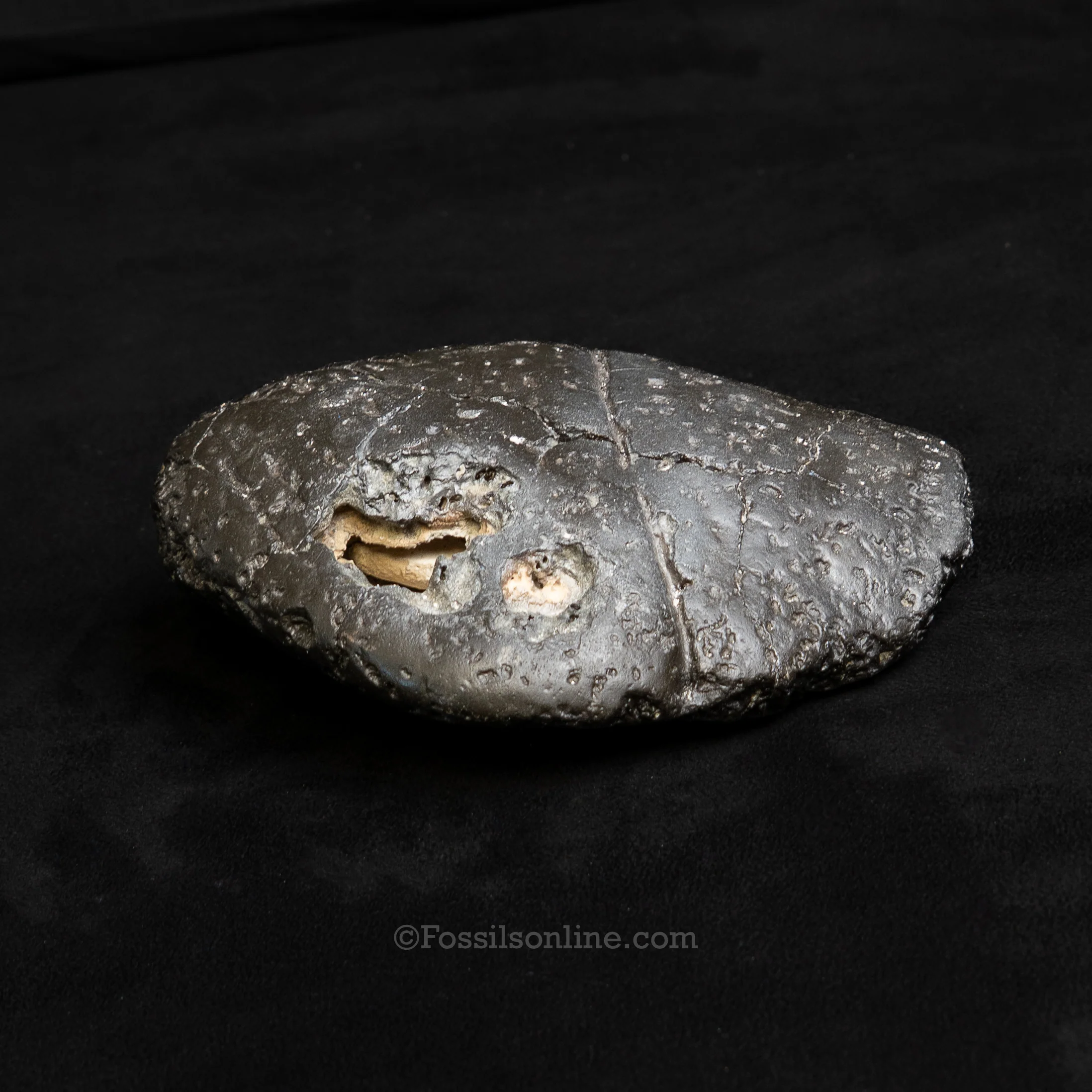
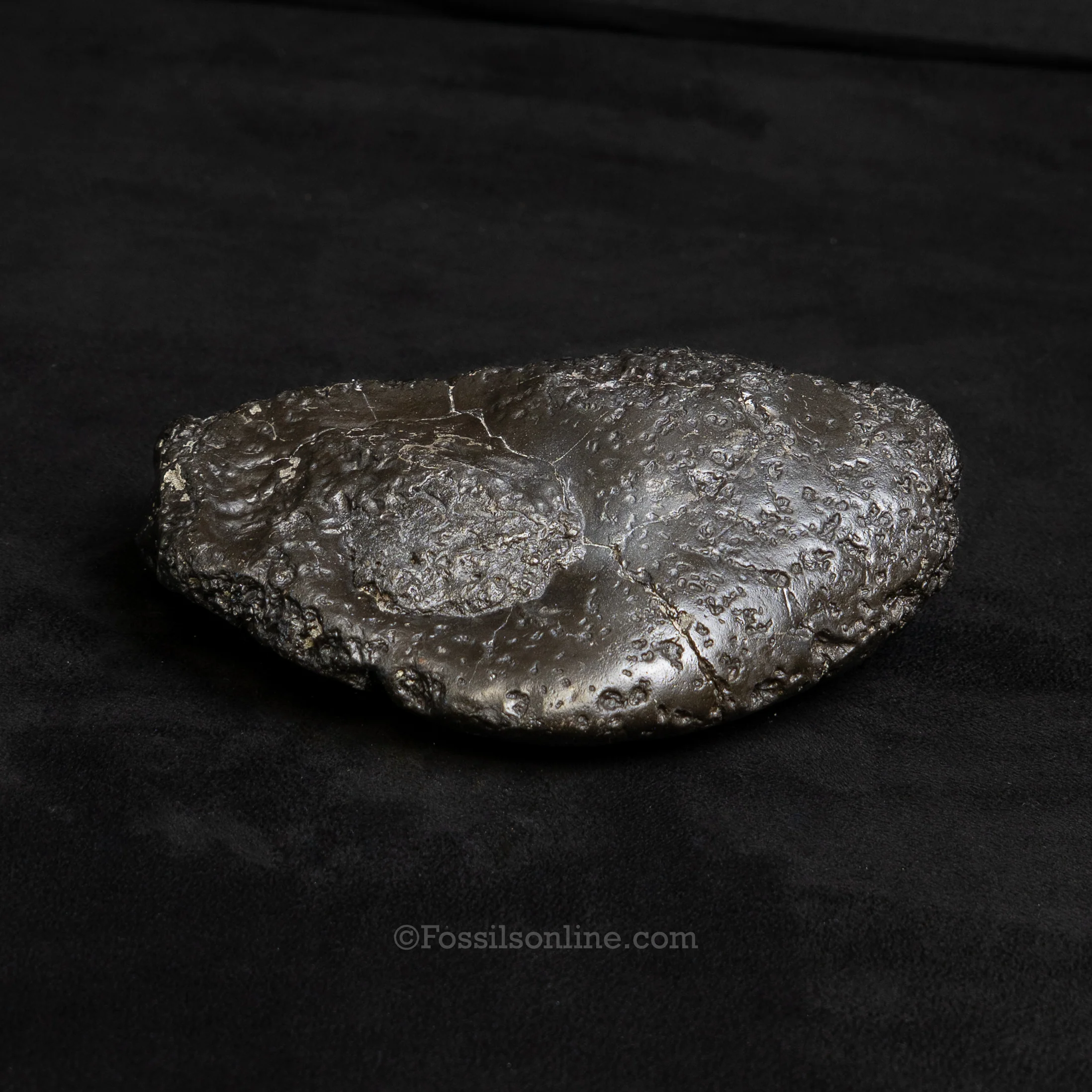
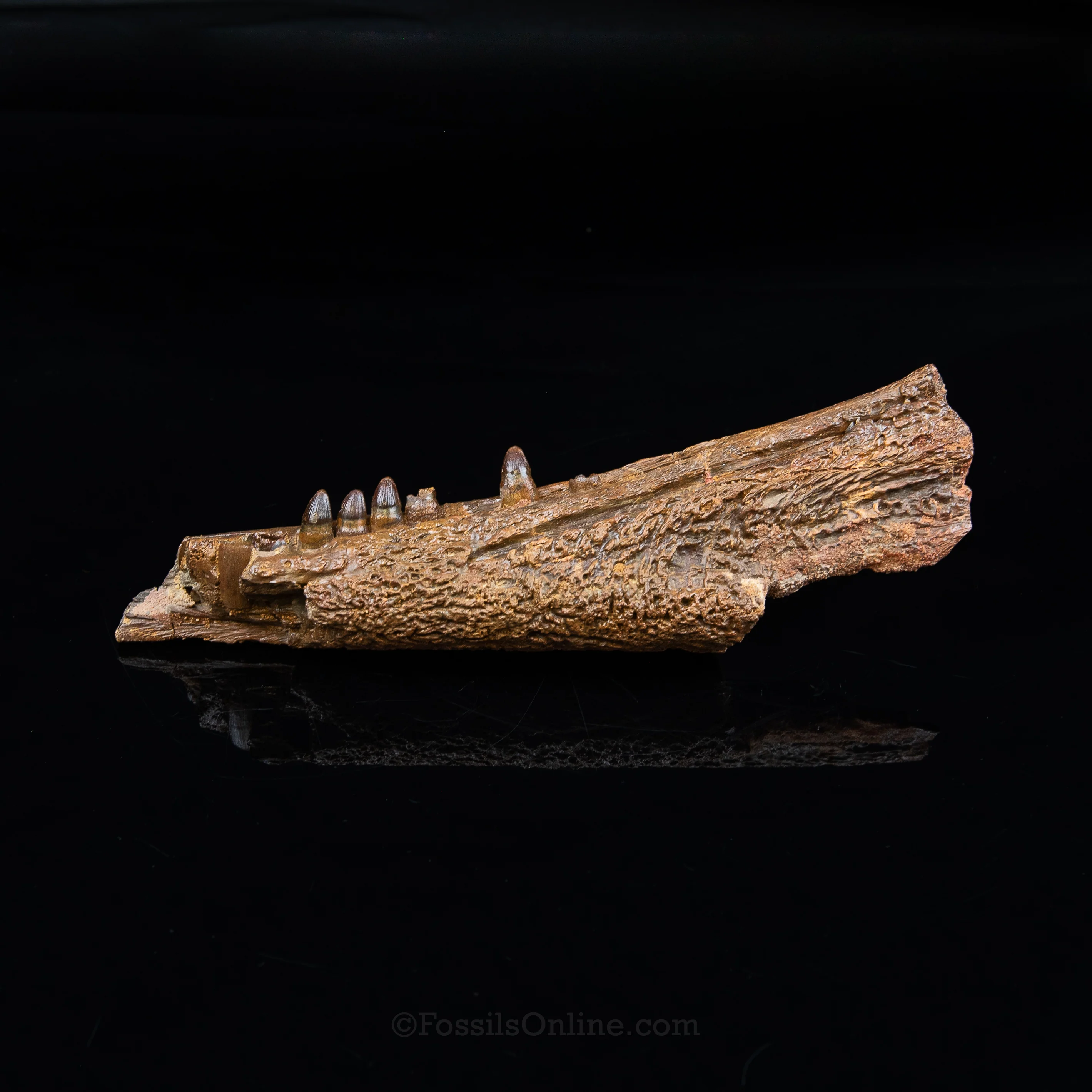
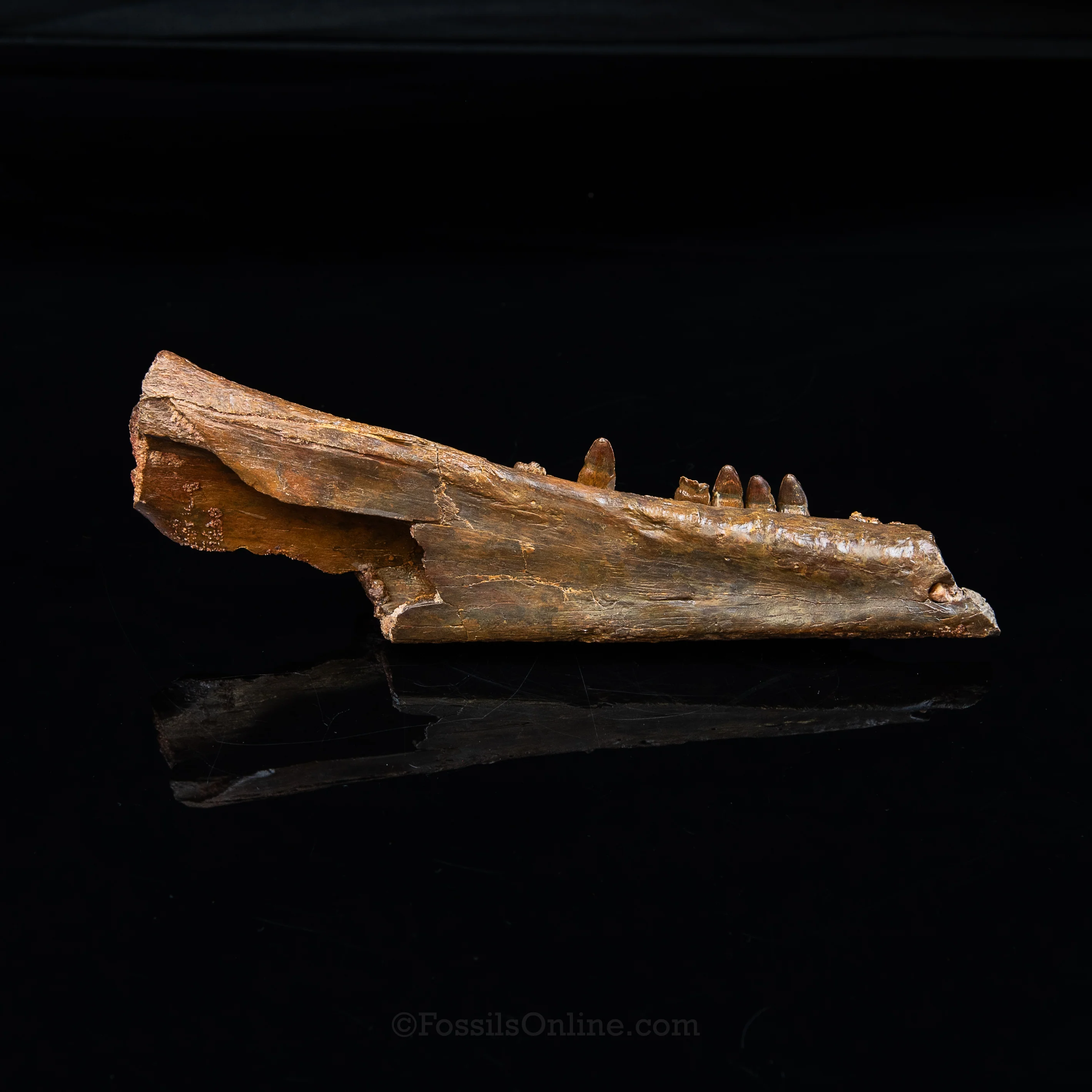
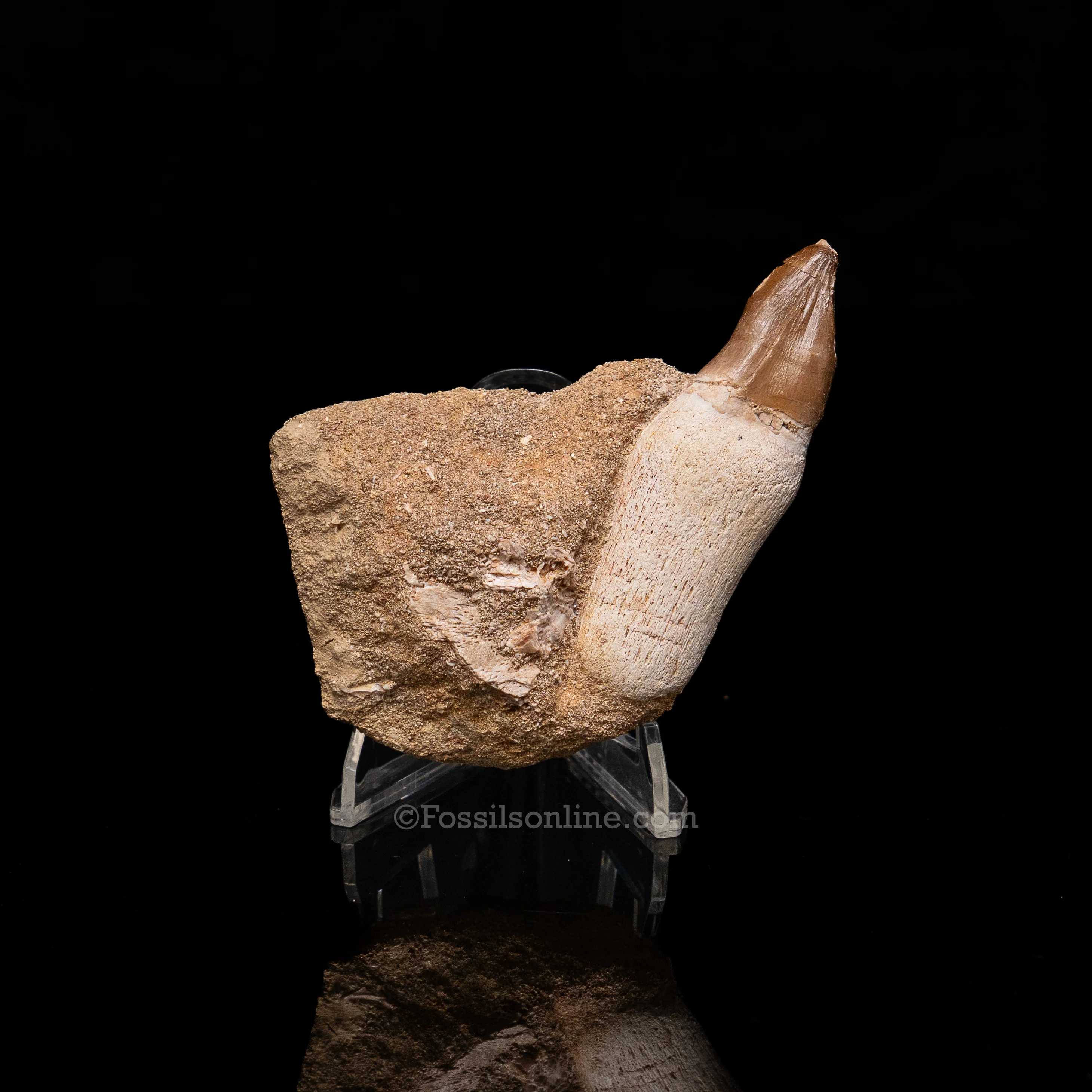
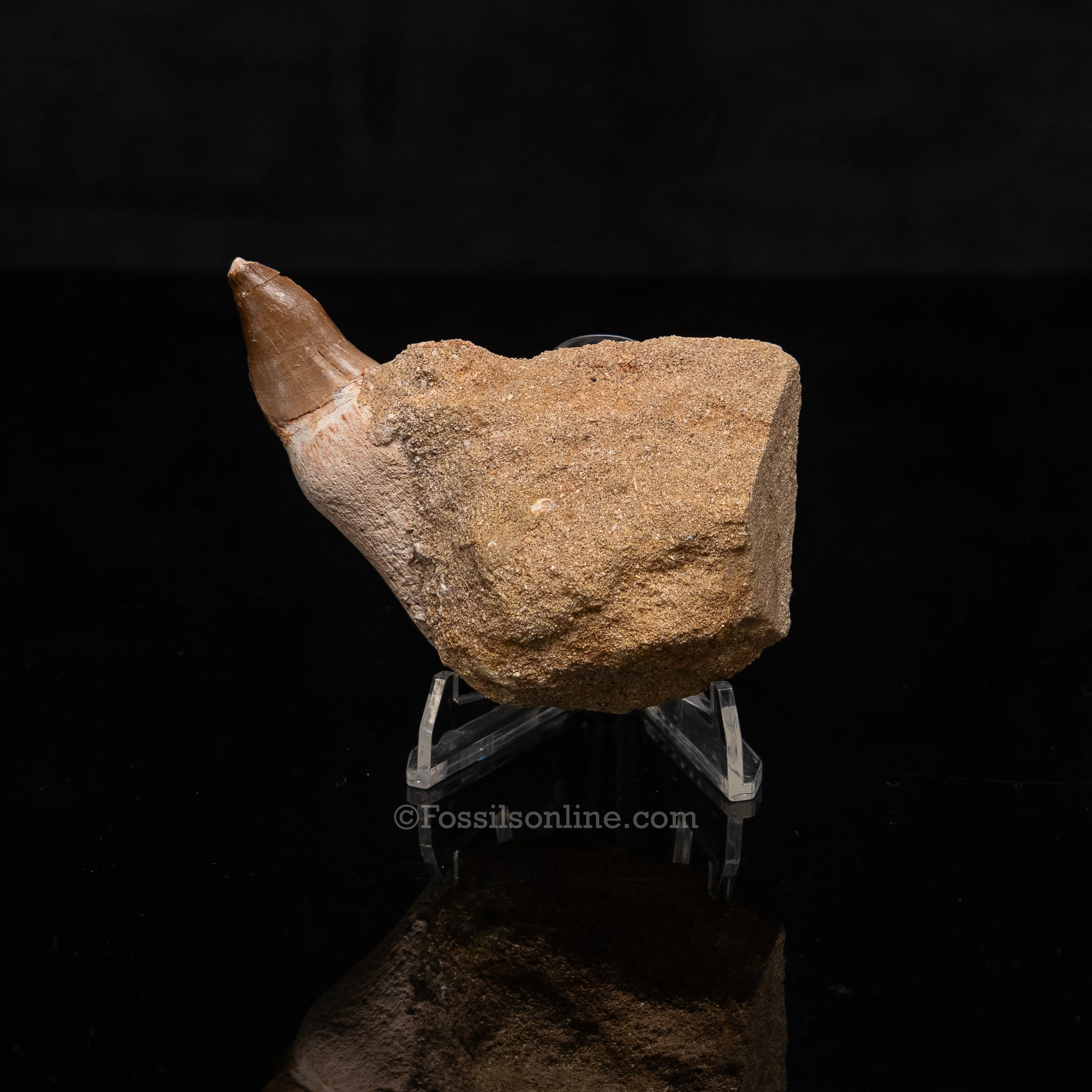
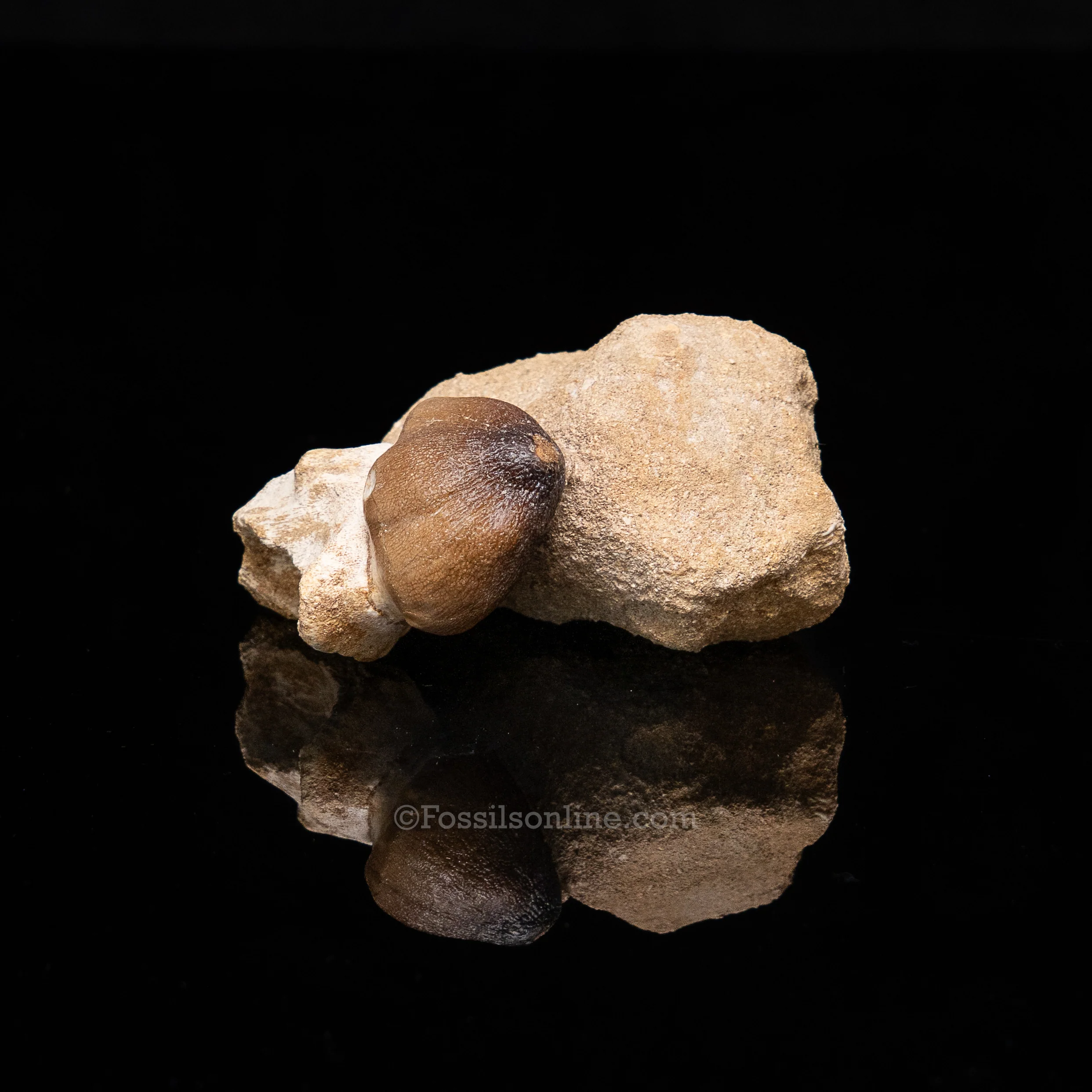
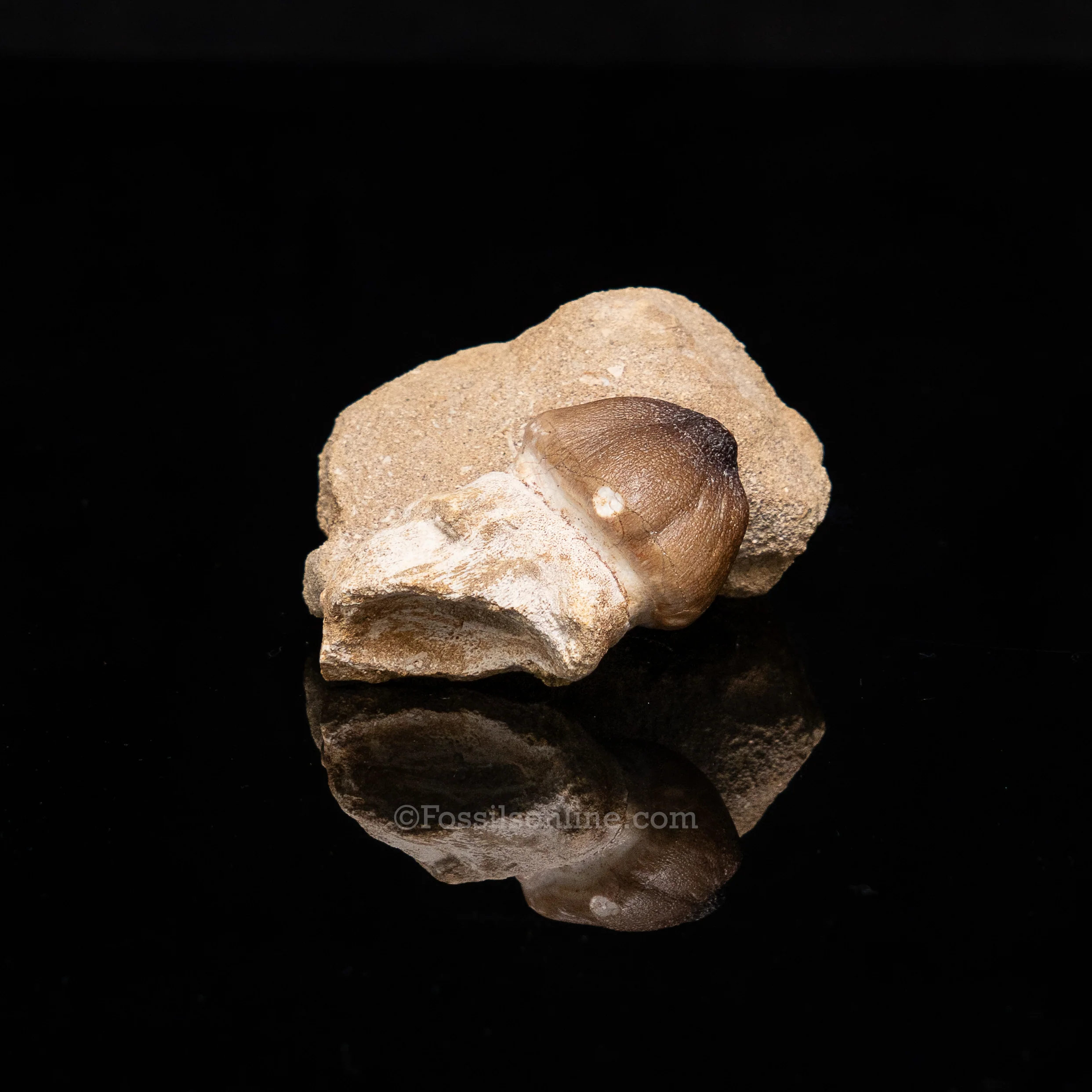
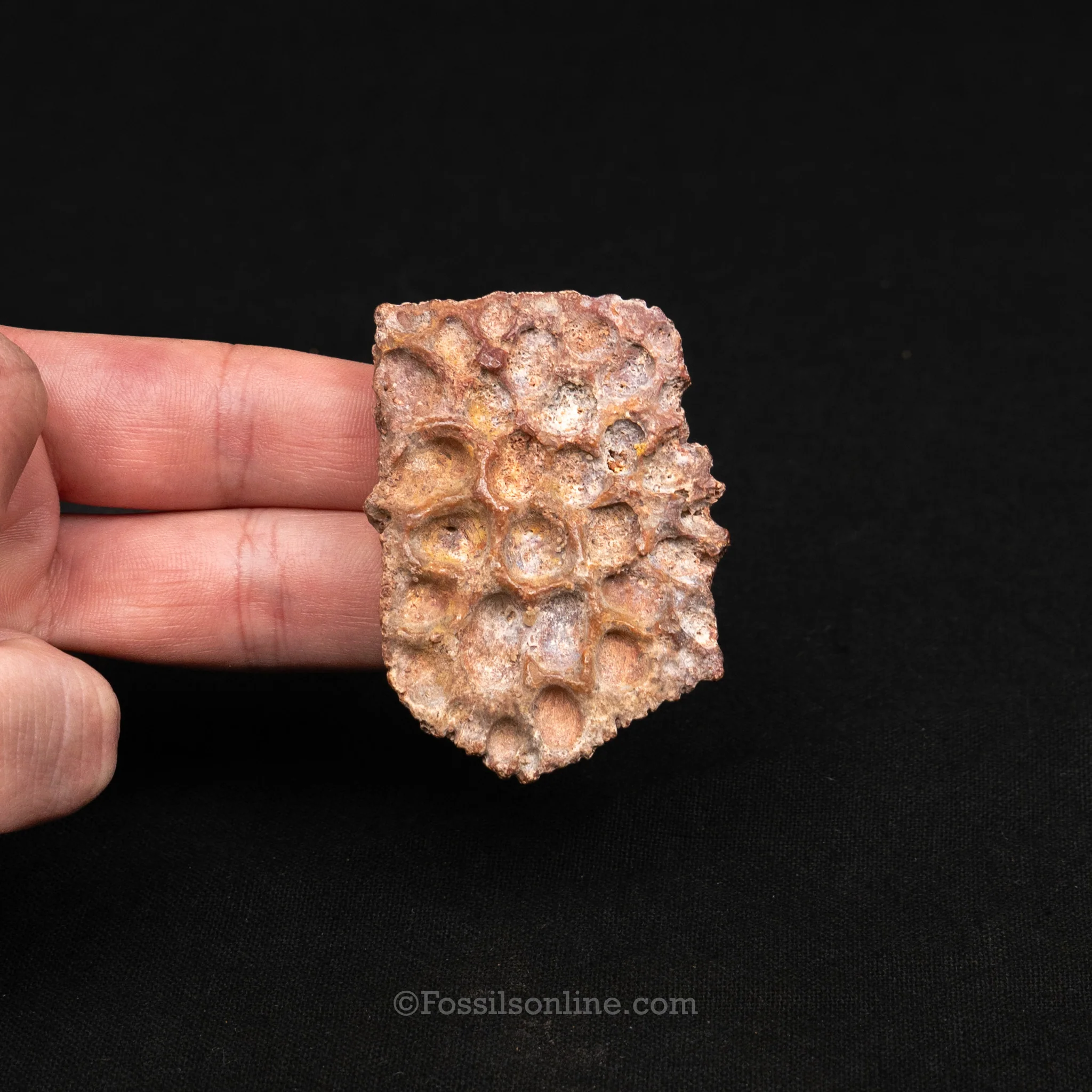
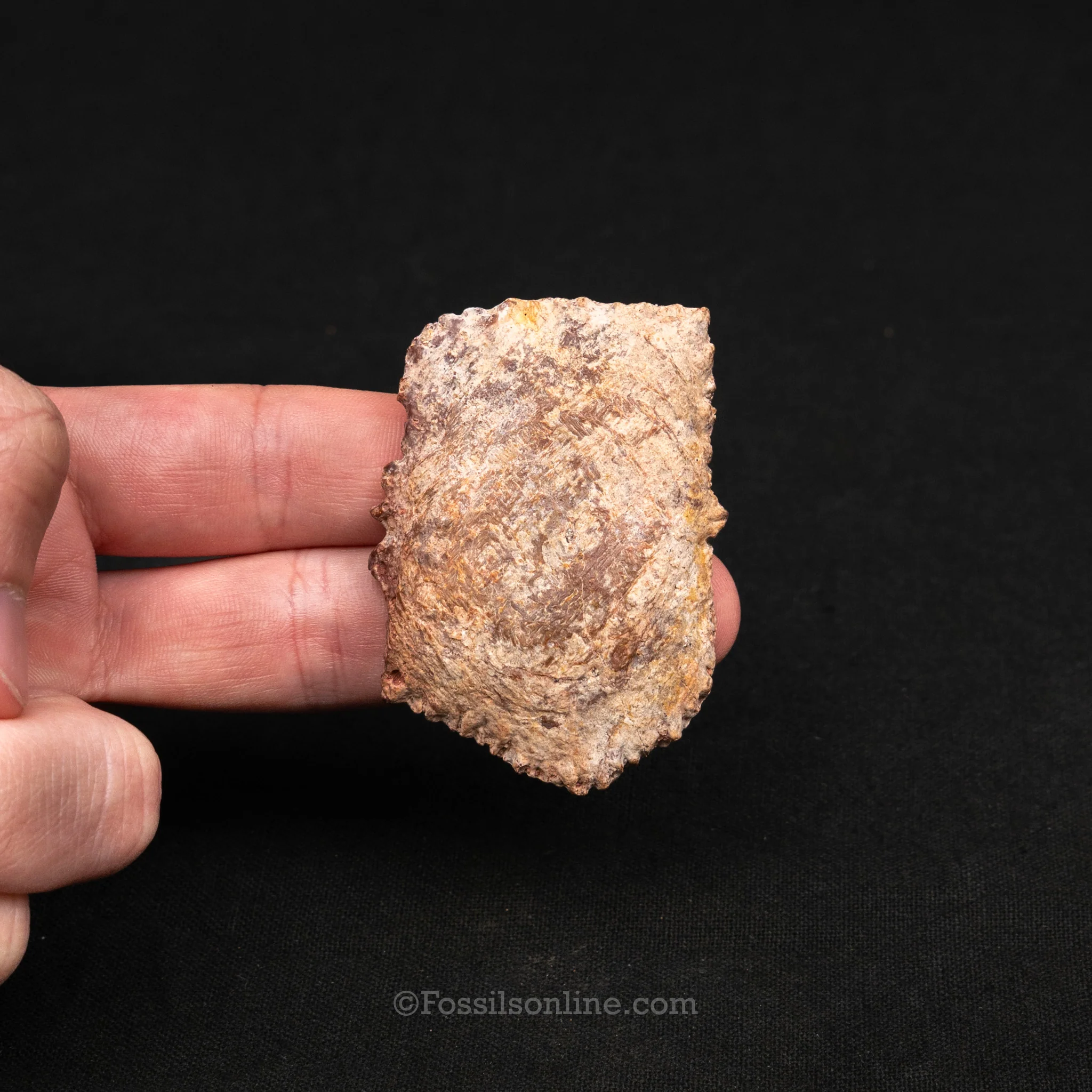
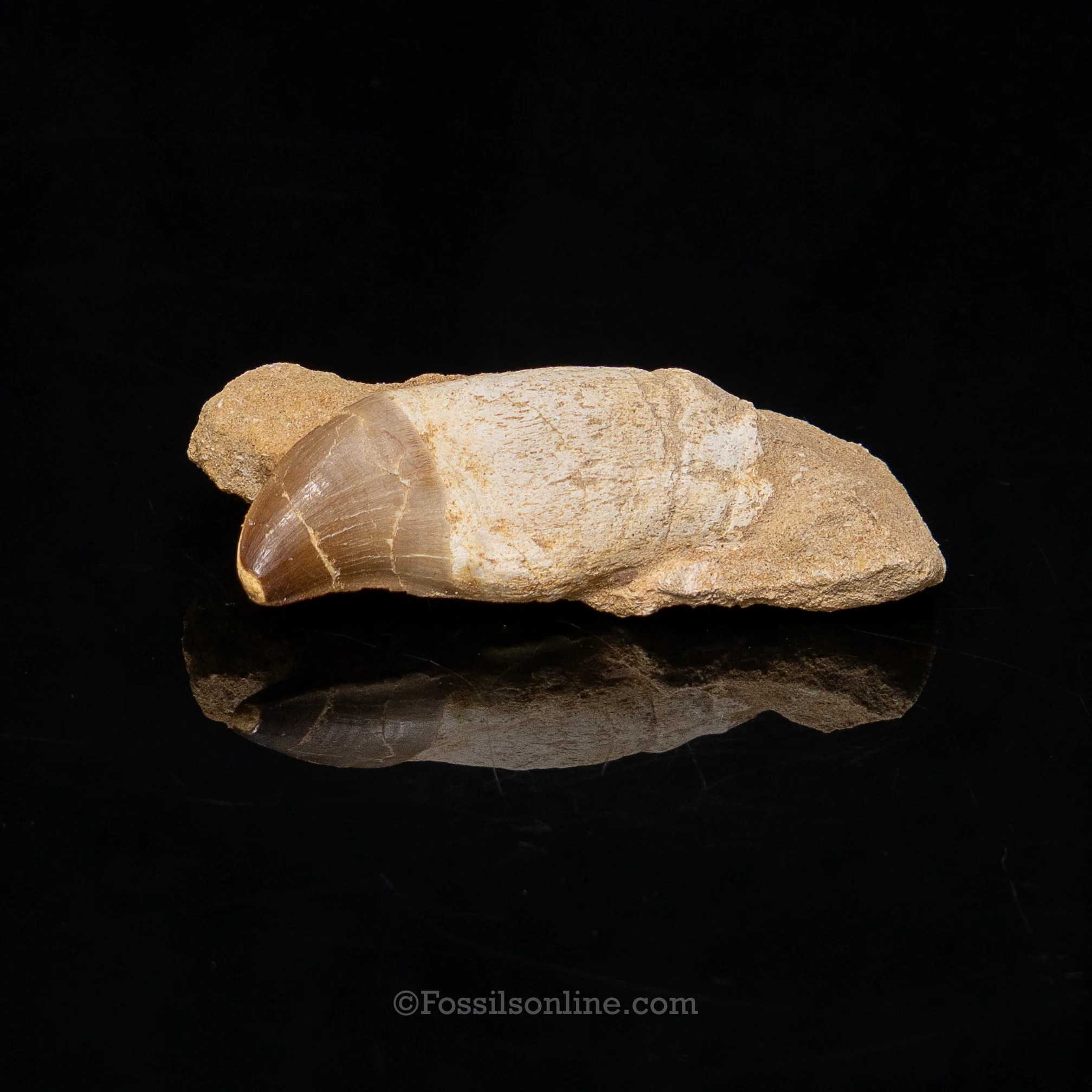
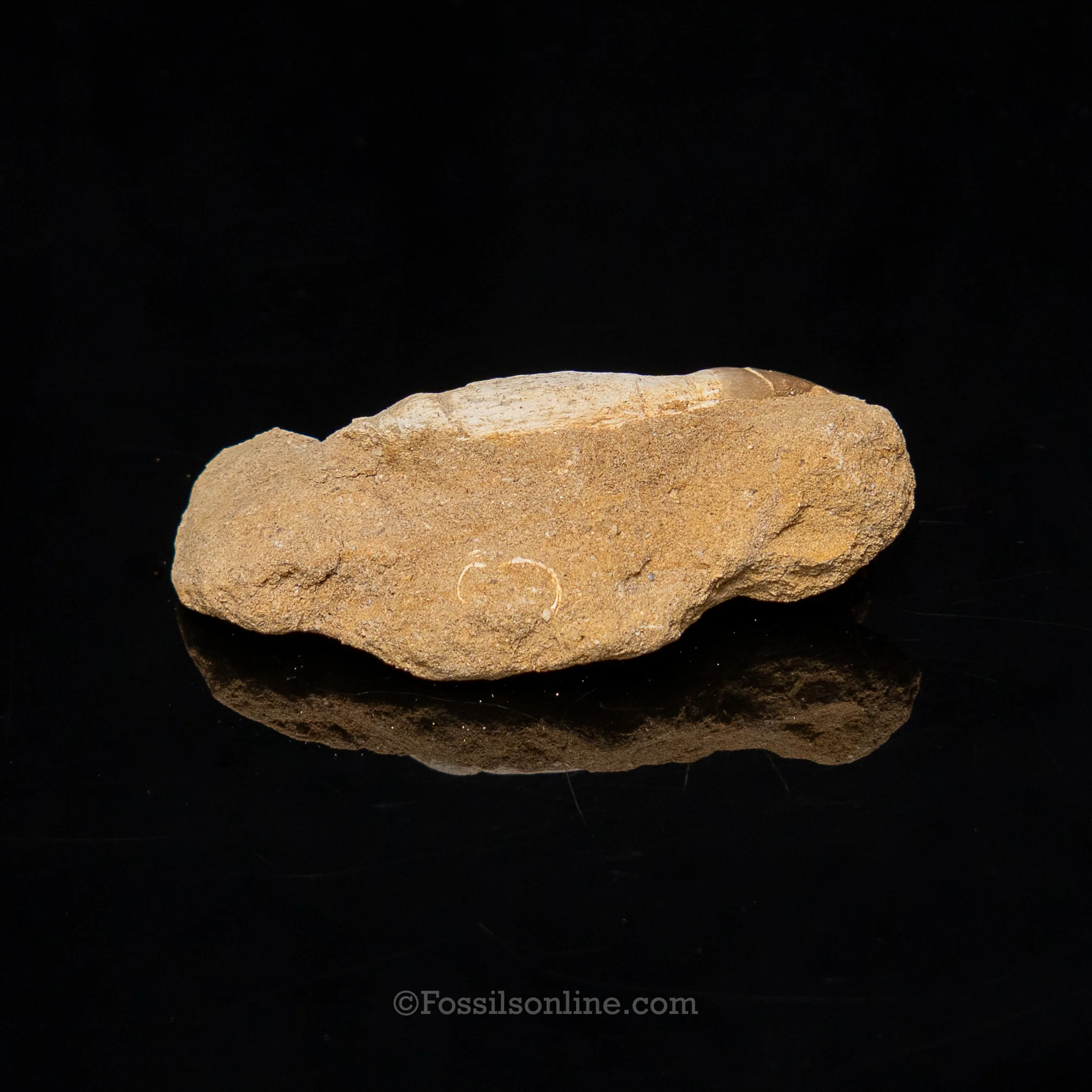
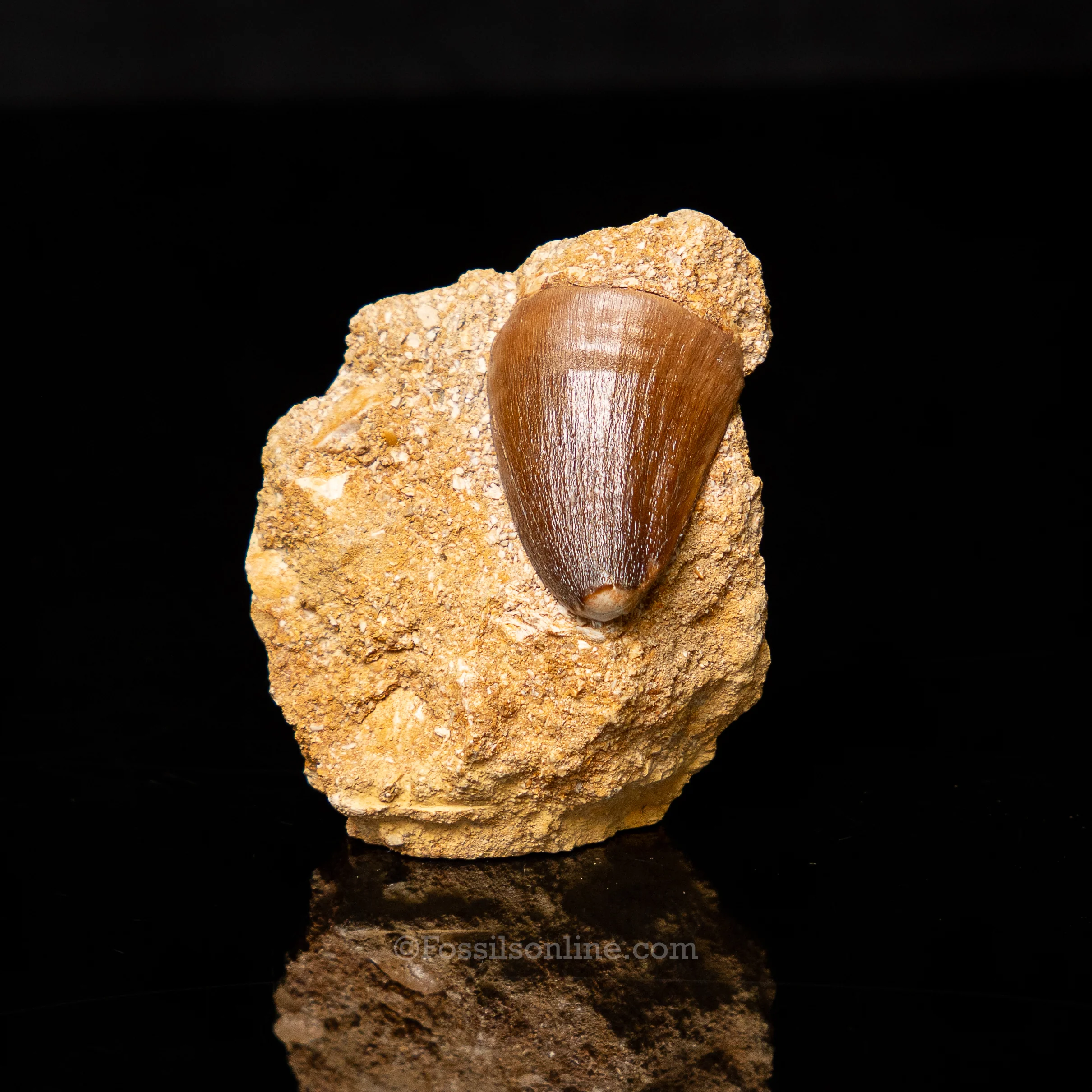
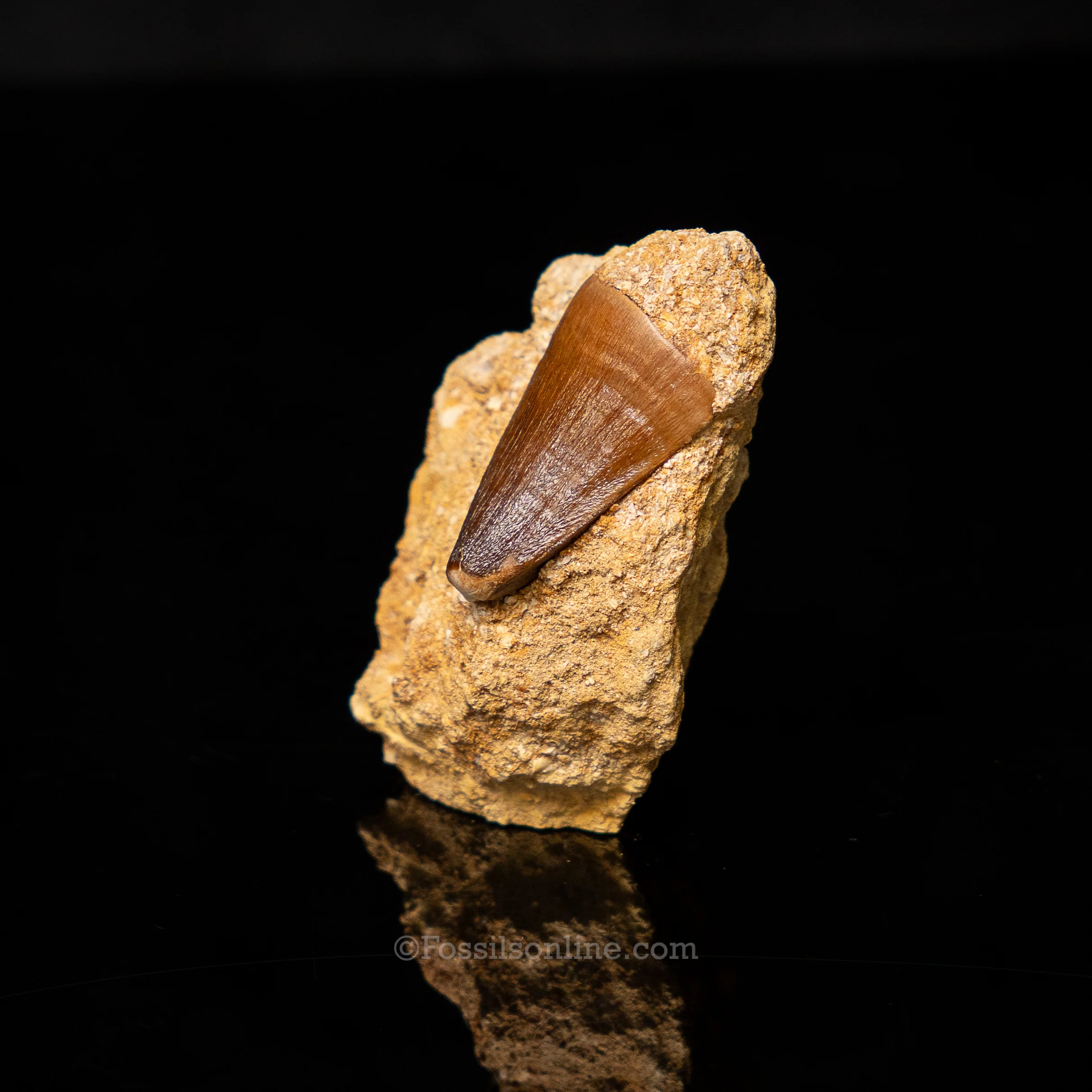
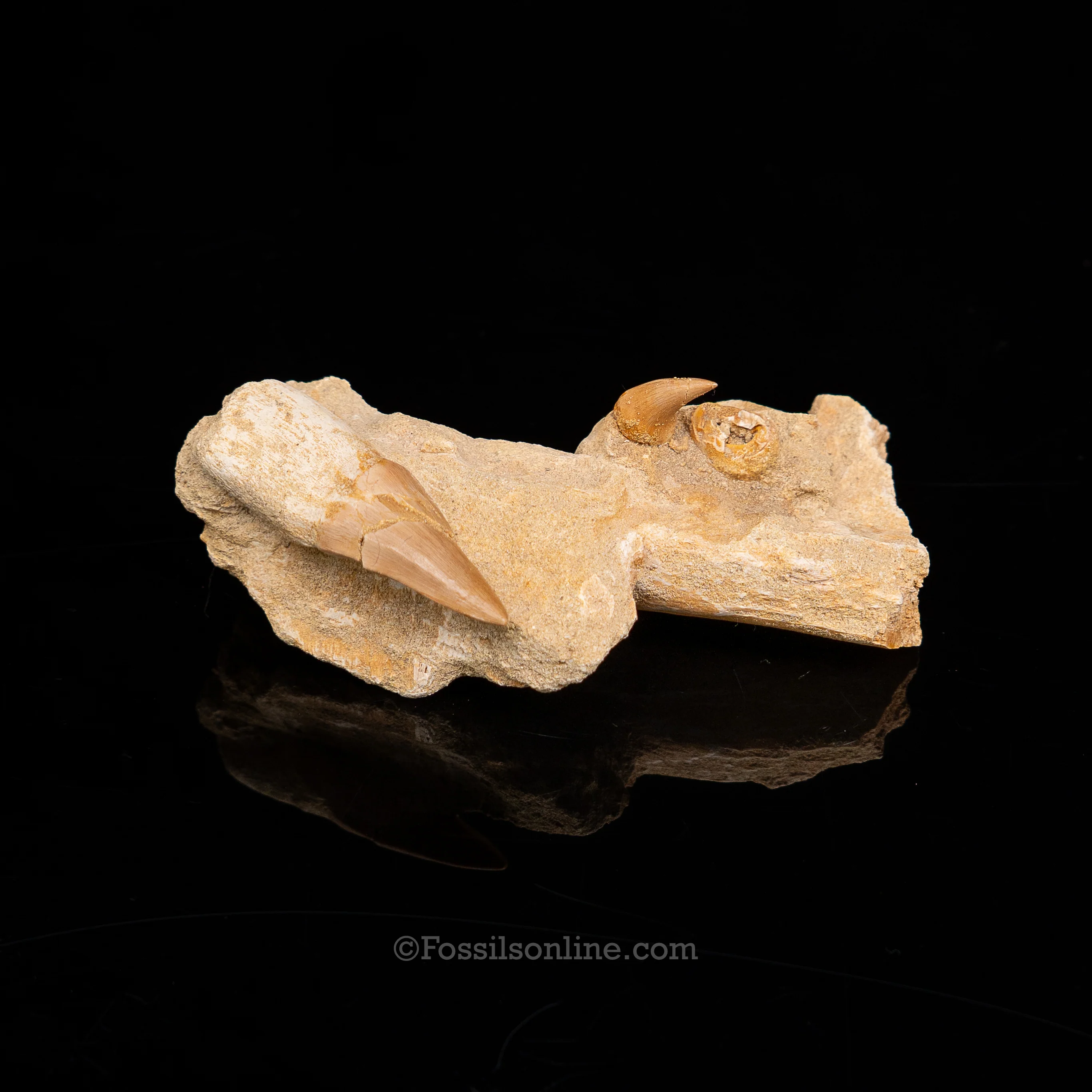
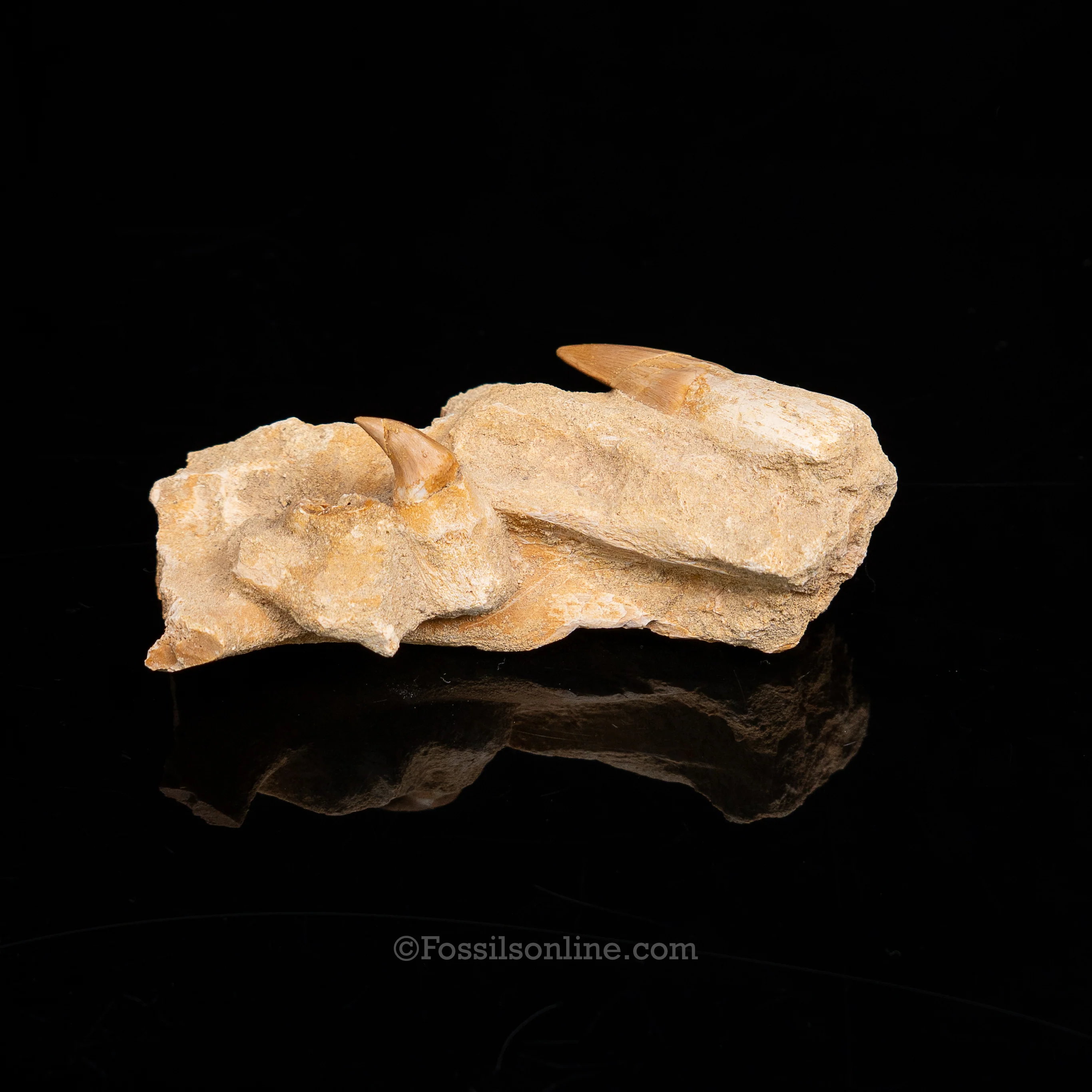
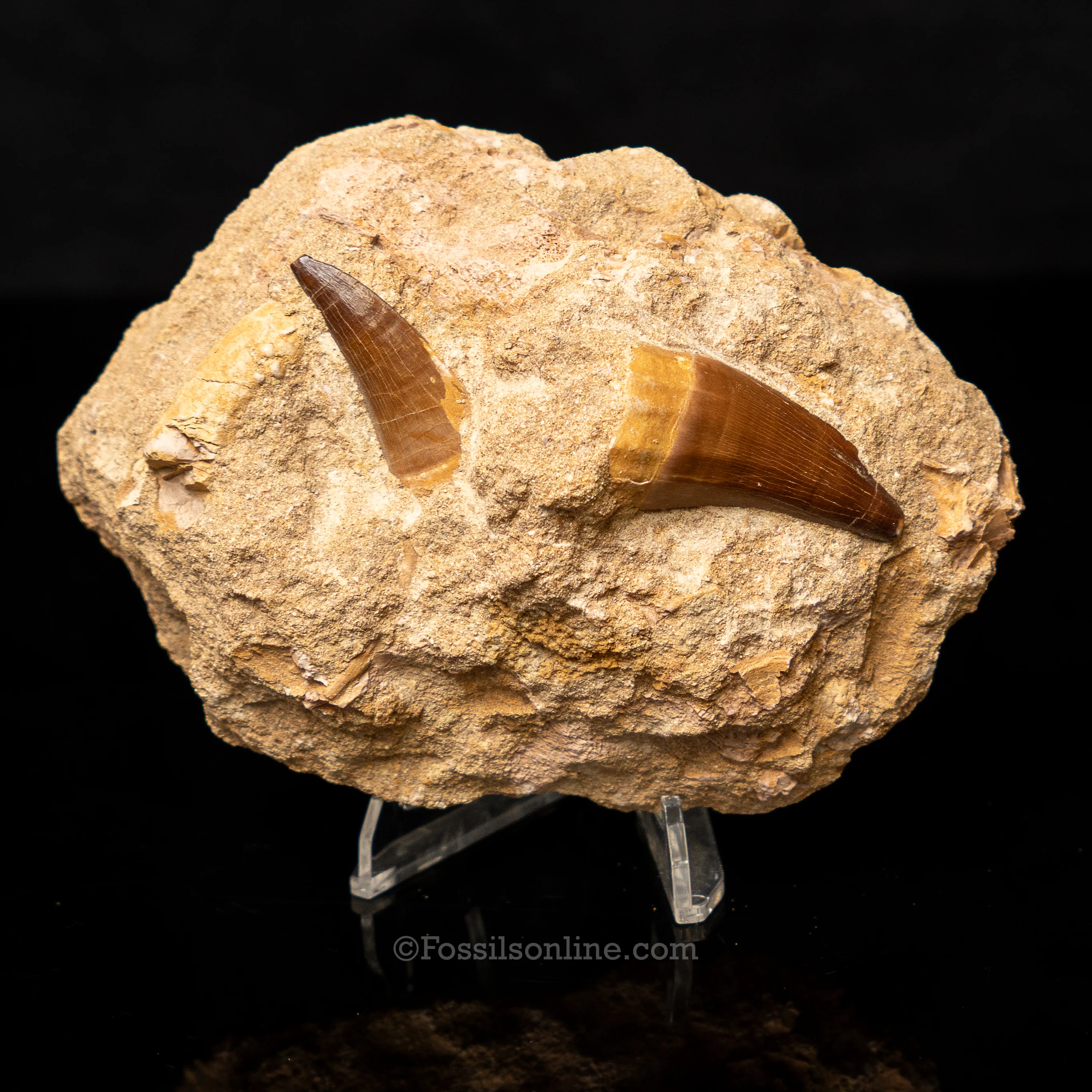
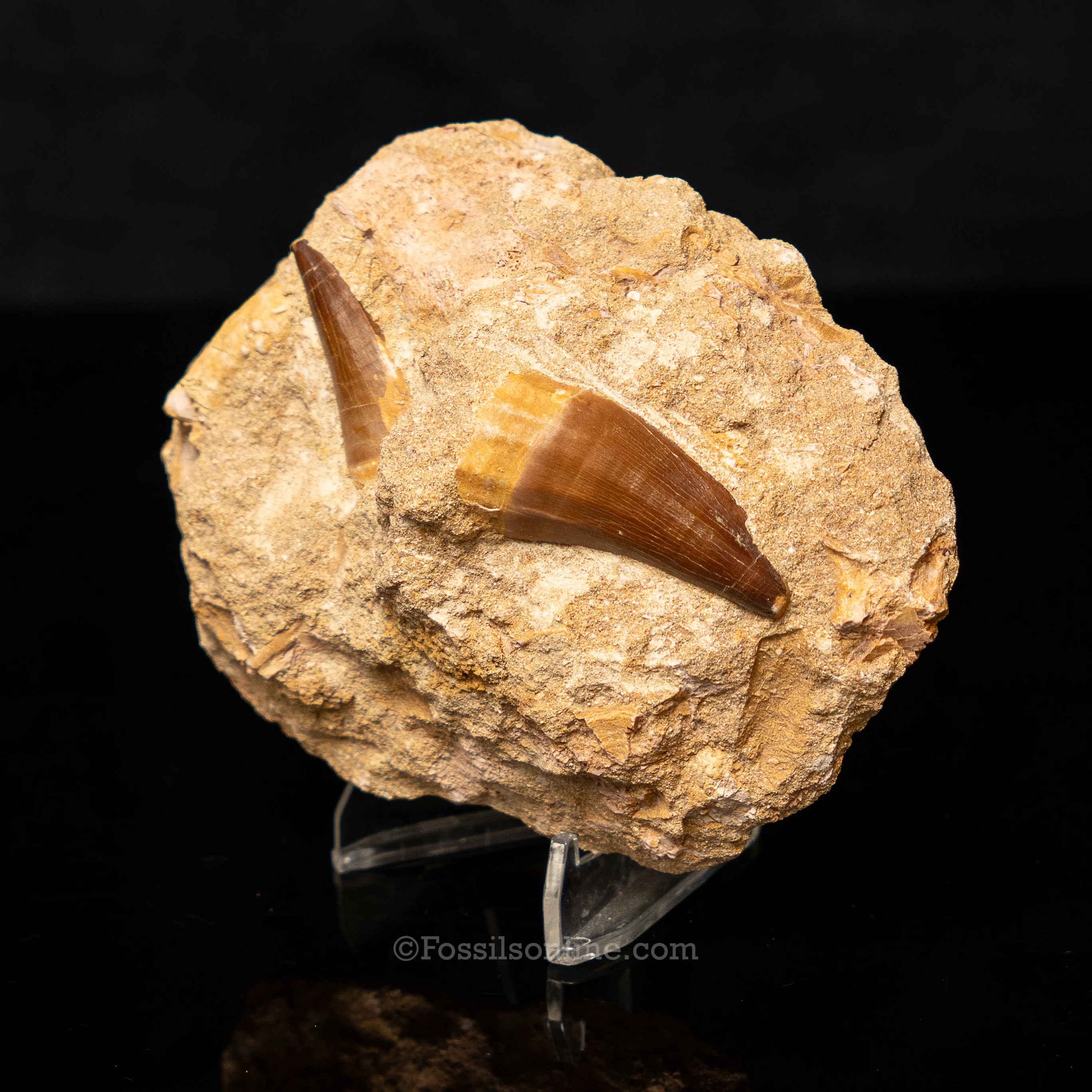
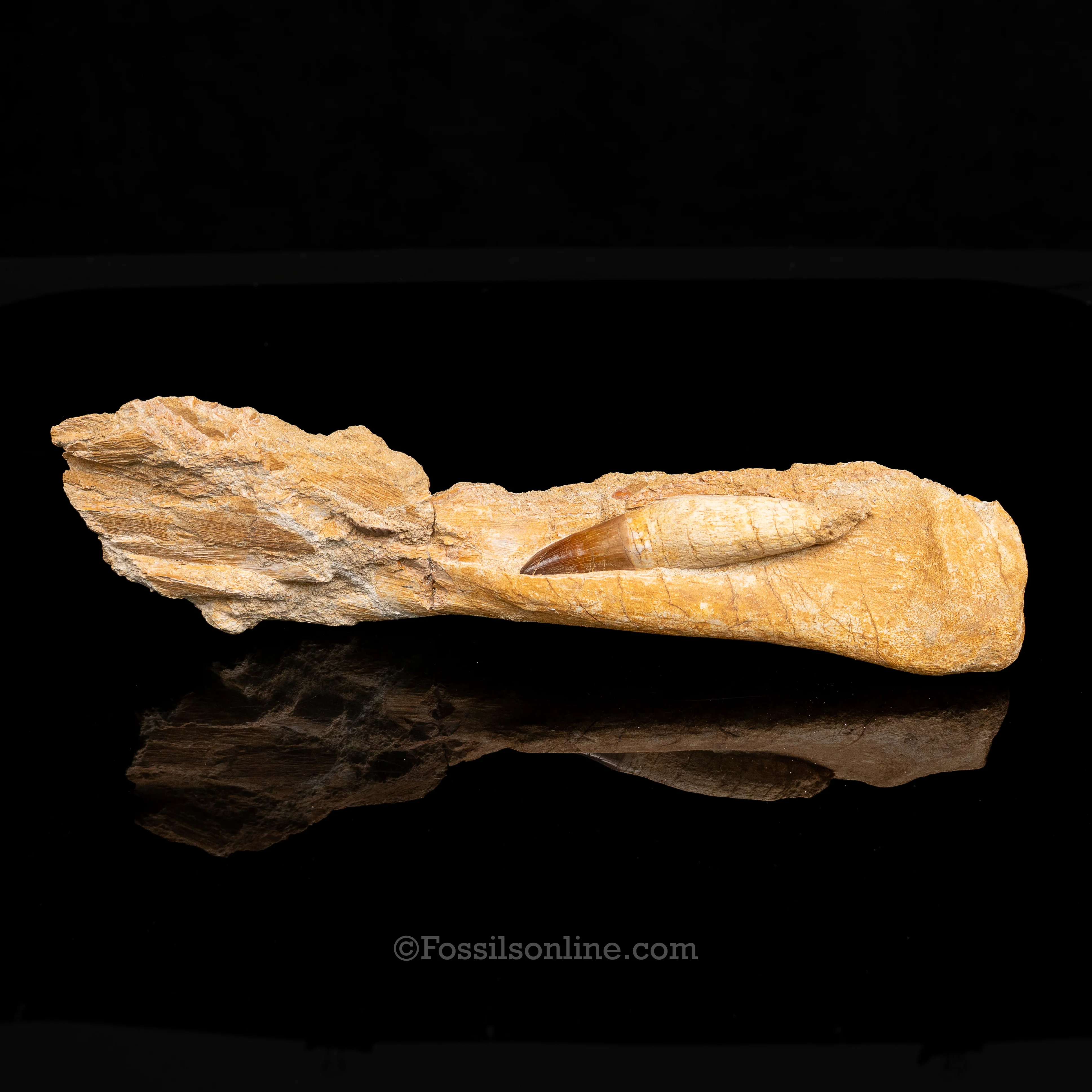
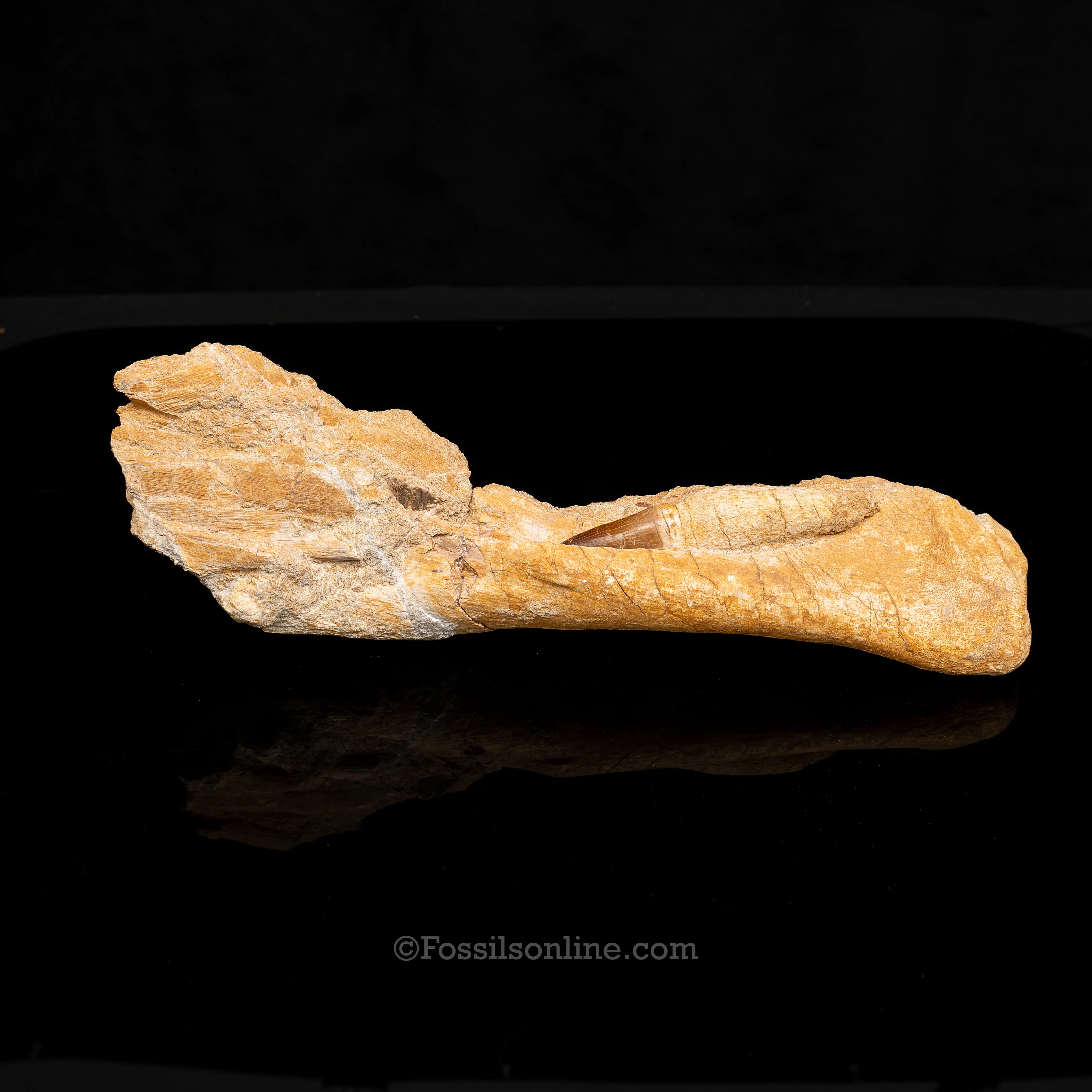
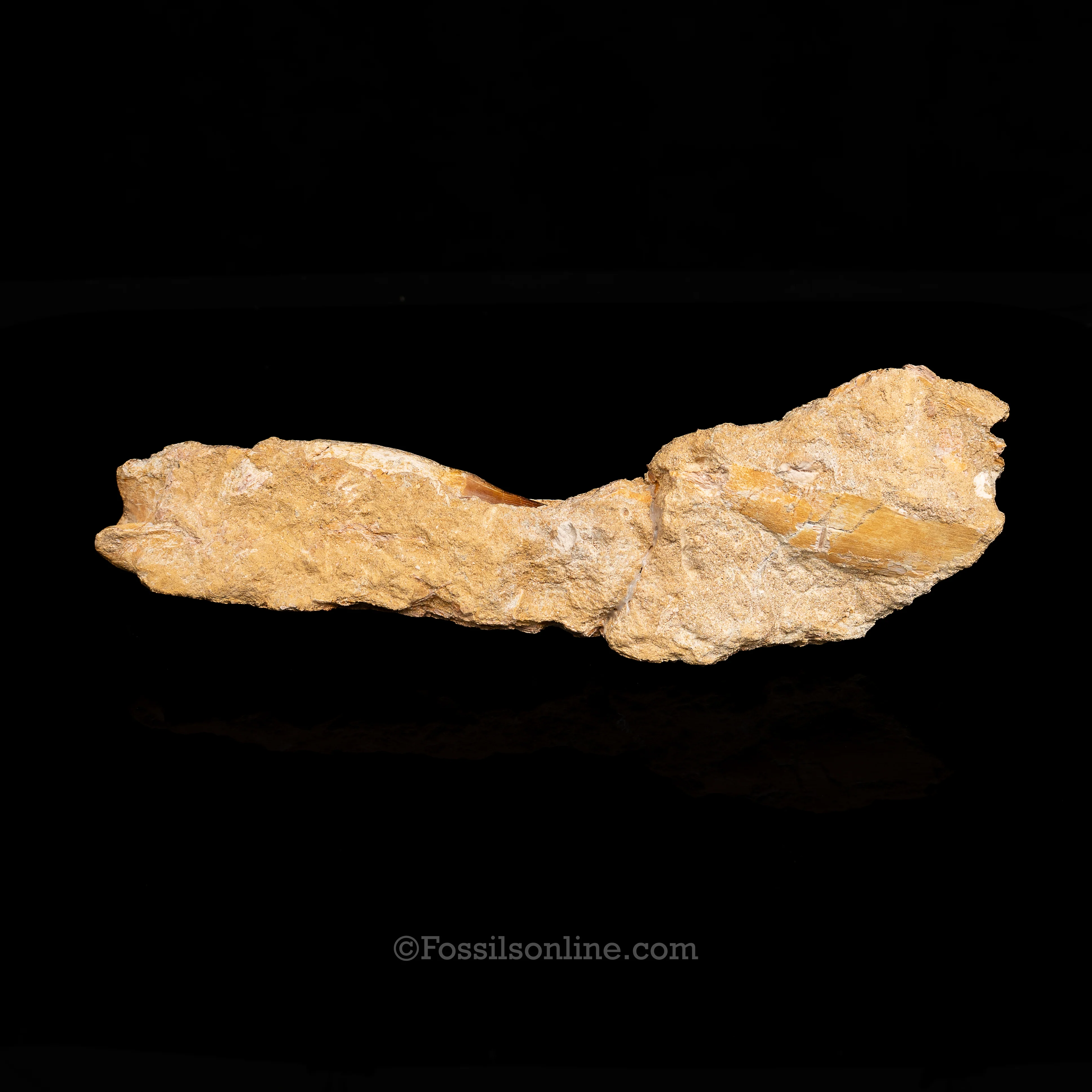
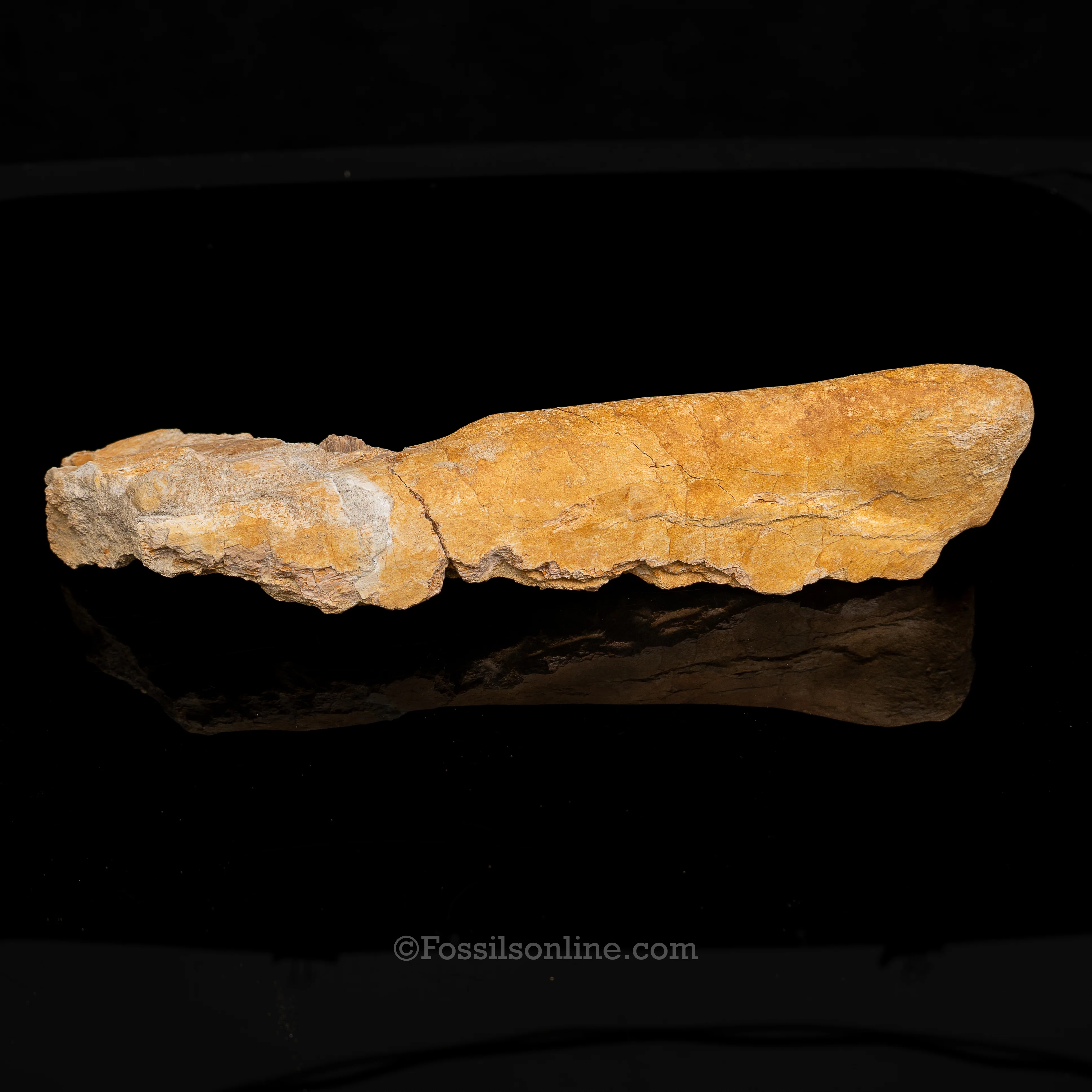
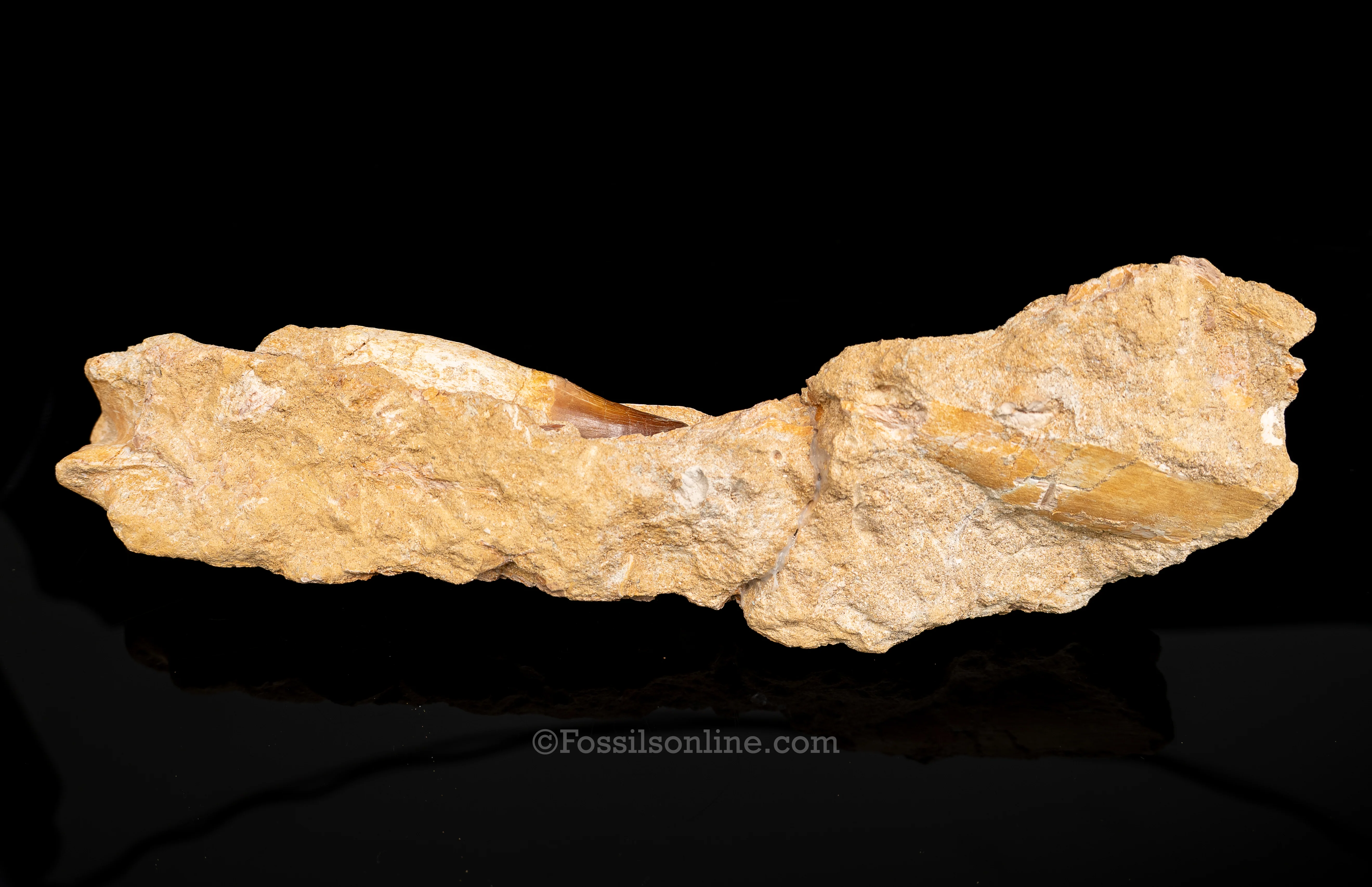
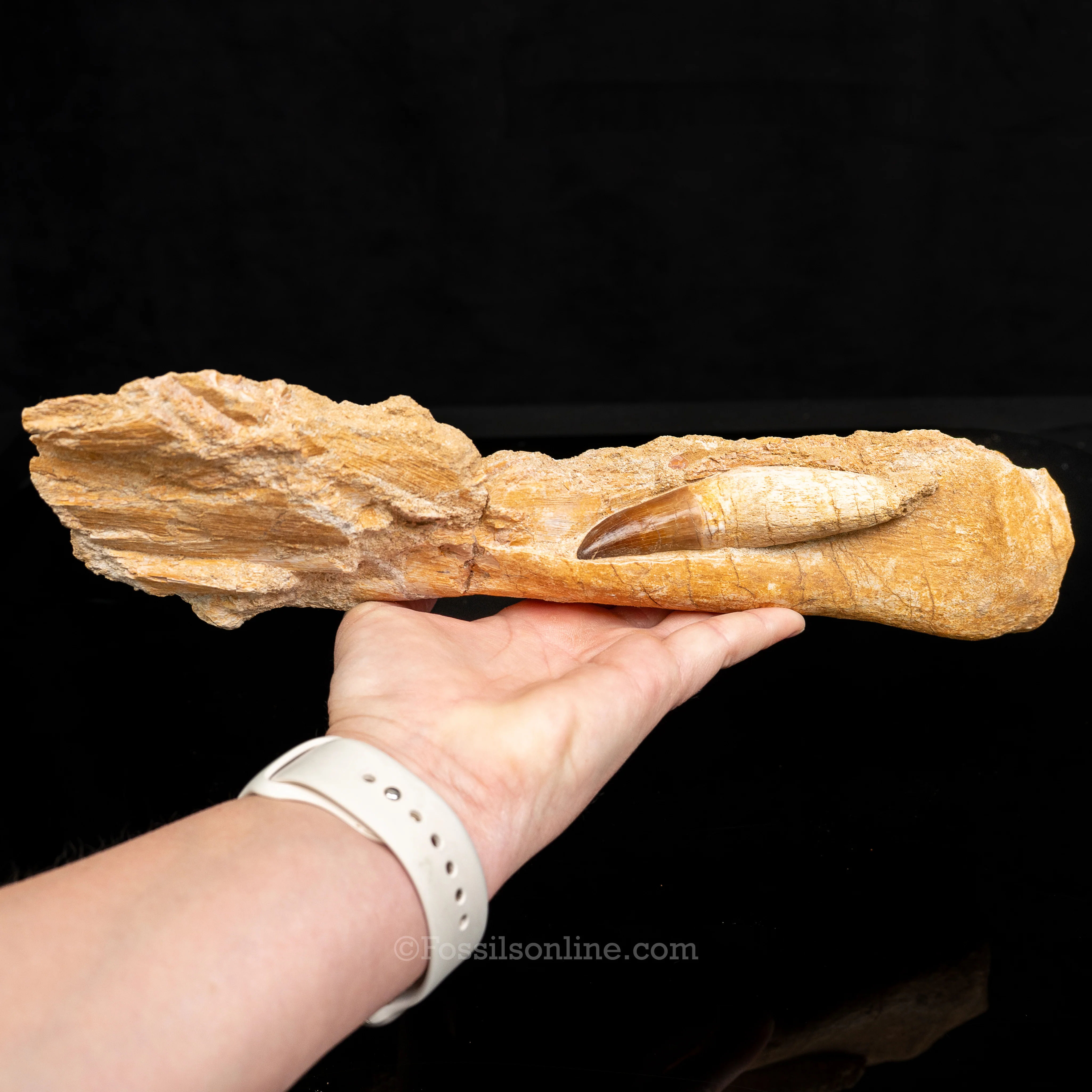
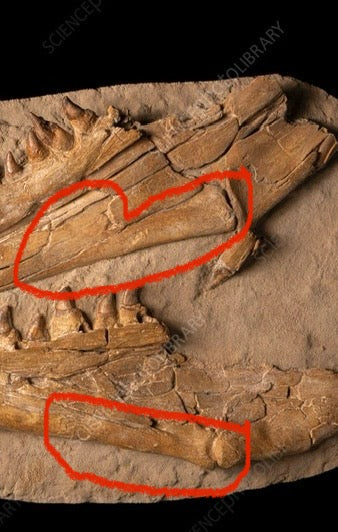
Beautiful rooted Mosasaur tooth embedded in a piece of jaw (Splenial). The jaw piece has repair where a piece broke off. This fossil has been hardened and stabilized, ready for display.
Mosasaurs were the rulers of the Late Cretaceous seas, and they earned that title completely. While dinosaurs dominated the land and pterosaurs owned the skies, mosasaurs had the oceans locked down. They were not dinosaurs themselves — they were massive, fully marine lizards, more closely related to today's monitor lizards and Komodo dragons than to anything that walked on land during their era. Over the course of roughly 20 million years they went from small coastal predators to the largest and most powerful marine hunters the world had ever seen, reaching lengths of 40 feet or more in the biggest species. Every mosasaur fossil for sale in our collection is an authentic specimen from these remarkable animals — real fossils from the most dominant ocean predators of the Mesozoic Era.
Built to Dominate — Anatomy of a Mosasaur
The genus Mosasaurus is the most famous of the family Mosasauridae, and its teeth are immediately recognizable: large, conical, deeply rooted, built for gripping and crushing rather than slicing. A mosasaur did not chase down prey and carve it up the way a great white shark does. It seized, crushed, and swallowed. The jaws were extraordinarily powerful, and many species had a second set of teeth on the roof of the mouth — pterygoid teeth — that helped pin struggling prey and work it toward the throat. Fish, squid, ammonites, sea turtles, marine birds, and other mosasaurs all ended up in those jaws. At the top of the food chain with no natural predators of their own, the largest mosasaurs were the most formidable ocean predators of their time — and their fossilized teeth and bones preserve that power in a way that is immediately legible to anyone who picks one up.
Why Morocco Produces the Best Mosasaur Fossils
Morocco is the premier source for mosasaur fossils on the collector market today, and the geology there explains why. The phosphate deposits of the Oulad Abdoun Basin preserve Late Cretaceous marine fauna in exceptional density — these were warm, productive shallow seas right at the end of the Mesozoic, teeming with life, and the phosphate-rich sediments that formed there were extraordinarily good at mineralizing hard tissue. Mosasaur teeth, jaw fragments, vertebrae, and paddle bones all emerge from these deposits with strong mineralization and excellent structural integrity. The color on Moroccan mosasaur fossil material tends toward warm tans, creams, and light browns, and the size and quality of the material is consistently impressive. When collectors search for real mosasaur teeth for sale, Moroccan specimens represent the best combination of quality, authenticity, and value available anywhere on the market.
Age, Rarity, and What It Means to Own a Mosasaur Fossil
What makes mosasaur fossils particularly compelling for collectors is the combination of extraordinary age and genuine accessibility. These animals lived and died 66 to 70 million years ago — fully twice as old as any Megalodon tooth — at the very end of the Mesozoic Era, in the final chapter of the age of reptiles. The asteroid impact that ended the Cretaceous killed mosasaurs along with the non-avian dinosaurs, making them true end-of-an-era animals. Every authentic mosasaur fossil is a physical remnant from the last generation of an entire world that no longer exists. And yet Moroccan material enters the collector market in enough volume that museum-quality mosasaur specimens remain within reach of a real-world budget — a situation that would be almost unimaginable with comparably ancient terrestrial reptile fossils from the same period. Whether you are buying your first prehistoric fossil or adding to a serious collection, a genuine mosasaur fossil is one of the most impressive objects the natural world has left behind.
Details & Craftsmanship
Every detail has been carefully considered to bring you the perfect product.
Details & Craftsmanship
Every detail has been carefully considered to bring you the perfect product.
Details & Craftsmanship
Every detail has been carefully considered to bring you the perfect product.
Details & Craftsmanship
Every detail has been carefully considered to bring you the perfect product.
Details & Craftsmanship
Every detail has been carefully considered to bring you the perfect product.
Details & Craftsmanship
Every detail has been carefully considered to bring you the perfect product.
Description
Beautiful rooted Mosasaur tooth embedded in a piece of jaw (Splenial). The jaw piece has repair where a piece broke off. This fossil has been hardened and stabilized, ready for display.
Mosasaurs were the rulers of the Late Cretaceous seas, and they earned that title completely. While dinosaurs dominated the land and pterosaurs owned the skies, mosasaurs had the oceans locked down. They were not dinosaurs themselves — they were massive, fully marine lizards, more closely related to today's monitor lizards and Komodo dragons than to anything that walked on land during their era. Over the course of roughly 20 million years they went from small coastal predators to the largest and most powerful marine hunters the world had ever seen, reaching lengths of 40 feet or more in the biggest species. Every mosasaur fossil for sale in our collection is an authentic specimen from these remarkable animals — real fossils from the most dominant ocean predators of the Mesozoic Era.
Built to Dominate — Anatomy of a Mosasaur
The genus Mosasaurus is the most famous of the family Mosasauridae, and its teeth are immediately recognizable: large, conical, deeply rooted, built for gripping and crushing rather than slicing. A mosasaur did not chase down prey and carve it up the way a great white shark does. It seized, crushed, and swallowed. The jaws were extraordinarily powerful, and many species had a second set of teeth on the roof of the mouth — pterygoid teeth — that helped pin struggling prey and work it toward the throat. Fish, squid, ammonites, sea turtles, marine birds, and other mosasaurs all ended up in those jaws. At the top of the food chain with no natural predators of their own, the largest mosasaurs were the most formidable ocean predators of their time — and their fossilized teeth and bones preserve that power in a way that is immediately legible to anyone who picks one up.
Why Morocco Produces the Best Mosasaur Fossils
Morocco is the premier source for mosasaur fossils on the collector market today, and the geology there explains why. The phosphate deposits of the Oulad Abdoun Basin preserve Late Cretaceous marine fauna in exceptional density — these were warm, productive shallow seas right at the end of the Mesozoic, teeming with life, and the phosphate-rich sediments that formed there were extraordinarily good at mineralizing hard tissue. Mosasaur teeth, jaw fragments, vertebrae, and paddle bones all emerge from these deposits with strong mineralization and excellent structural integrity. The color on Moroccan mosasaur fossil material tends toward warm tans, creams, and light browns, and the size and quality of the material is consistently impressive. When collectors search for real mosasaur teeth for sale, Moroccan specimens represent the best combination of quality, authenticity, and value available anywhere on the market.
Age, Rarity, and What It Means to Own a Mosasaur Fossil
What makes mosasaur fossils particularly compelling for collectors is the combination of extraordinary age and genuine accessibility. These animals lived and died 66 to 70 million years ago — fully twice as old as any Megalodon tooth — at the very end of the Mesozoic Era, in the final chapter of the age of reptiles. The asteroid impact that ended the Cretaceous killed mosasaurs along with the non-avian dinosaurs, making them true end-of-an-era animals. Every authentic mosasaur fossil is a physical remnant from the last generation of an entire world that no longer exists. And yet Moroccan material enters the collector market in enough volume that museum-quality mosasaur specimens remain within reach of a real-world budget — a situation that would be almost unimaginable with comparably ancient terrestrial reptile fossils from the same period. Whether you are buying your first prehistoric fossil or adding to a serious collection, a genuine mosasaur fossil is one of the most impressive objects the natural world has left behind.